A handshake feels automatic until someone leans in for a cheek kiss. Then the whole family freezes. Greeting customs around the world differ in how many kisses, how deep a bow, and how firm a grip, and knowing the basics turns a nerve-racking hello into a friendly one.
The good news: nobody expects a visitor to get it perfect. What matters is showing attention and warmth, which is the basic job of any greeting. According to Wikipedia's overview of greeting customs, greetings exist in every known human culture, and they signal the type of relationship and the level of formality between the people meeting.
Here is a plain-English tour of the greetings your family is most likely to meet, plus what to do when you are not sure.
Why do greetings differ so much from place to place?
A greeting does two jobs at once. It announces that you come in peace, and it shows where you and the other person stand: friends, strangers, boss, elder. Because every culture answers those questions differently, the gestures differ too.
Wikipedia's greeting entry notes that customs are highly culture- and situation-specific, and that they can even change within one country depending on social status, relationship, and etiquette. So the cheek-kiss count your cousin uses in one French region may not match the count in the next region over. That is not you getting it wrong; that is the custom itself being local.
Greetings also mix the spoken and the physical. A verbal hello often comes with a gesture, and the gesture carries much of the meaning. Open arms usually signal a hug is expected, while crossed arms can read as hostility, per the same source.
What's the deal with cheek kisses, and how many are we talking?
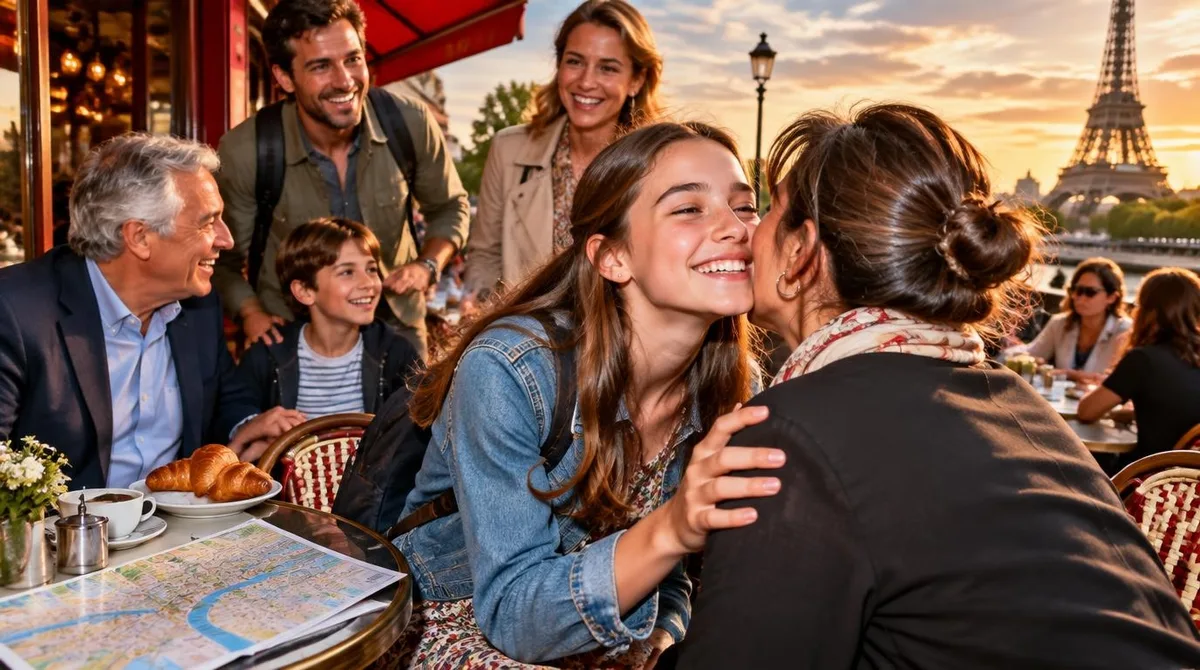
Cheek kissing is standard greeting behavior across much of Europe, in Quebec, and in parts of Latin America. The tricky part is the number, because it genuinely varies by country and even by region.
According to Wikipedia, Russians, Poles, Slovenians, Serbians, Dutch people, Iranians and Egyptians commonly kiss three times on alternate cheeks. Italians, Spaniards, Hungarians and Romanians usually go twice. In Mexico and Belgium, one kiss does the job. France is its own puzzle: two kisses are most common nationwide, but Provence gives three, Nantes gives four, and parts of Brittany and Poitou-Charentes prefer just one.
Practical steps for visitors: let your host lead. If they lean in, follow their rhythm and count. If you stop early or go one kiss long, a smile covers the difference. In Oman, Wikipedia notes, men sometimes kiss one another on the nose after a handshake, which surprises most travelers, but you only need to respond kindly if it happens to you.
Do handshakes work everywhere?
The handshake is very common in Western cultures, and it is a reasonable default for a traveler almost anywhere. But even this familiar move has local settings. Wikipedia describes subtle variations in grip strength, shake vigor, and whether one hand covers the other, and notes that facial expression, body language and eye contact all shape what kind of greeting is expected.
The safest version is a moderate grip, a couple of shakes, eye contact and a smile. Watch what the other person does with their hands in the first seconds of a meeting. If they keep their hands back and nod instead, follow that cue rather than reaching out anyway. We covered a connected angle in Library Programs for Families: The Free Stuff Parents Keep Forgetting About.
What about bows and other gestures families might meet?
Not every hello involves touching. One well-known example from the source material is the Chinese gongshou greeting, sometimes called the fist-and-palm salute: the right fist rests in the palm of the left hand, and both move back and forth a couple of times. It is a respectful, contact-free hello that visitors may see at formal occasions and in traditional settings.
History offers plenty of other gestures. Hat tipping was once a normal male greeting in Europe and America, from the Middle Ages until men largely stopped wearing hats in the mid-20th century, according to Wikipedia. King Louis XIV of France reportedly made a point of at least touching his hat to every woman he met. The gesture has mostly faded, though you will still see it in old films, at weddings, and in period dramas your kids may quote.
The takeaway for parents: gestures are learnable, and kids often pick them up faster than adults. Treating a new greeting as a fun family challenge, rather than a test, works better than drilling rules in the hotel lobby.
What this means for your family's next trip
Our analysis, after laying out the customs above: the travel-proof greeting is a warm smile, a spoken hello in the local language if you can manage it, and a willingness to mirror your host. Every custom covered here, from three kisses to fist-and-palm, rewards the visitor who pays attention and responds in kind.
A few habits help. Research the greeting for your destination before you go, and practice it at the dinner table; kids find the variety genuinely funny, and rehearsal removes the freeze. Greet elders and hosts slightly more formally than you think you need to; erring formal is easy to relax, while erring casual is harder to walk back. And if someone greets you in a way that surprises you, accept it graciously rather than stepping back, since the gesture was almost certainly meant as welcome.
If your family enjoys this kind of thing, greeting customs fit naturally into a bigger interest in how cultures celebrate and connect. Our guide to celebration traditions around the world families can try at home pairs well with a greeting-practice night, and the culture section keeps track of the festivals and fandoms kids bring home from school. For related coverage, see Celebration Traditions Around the World Families Can Try at Home.
One honest caveat: customs shift over time and vary by setting, so a business meeting, a family dinner and a street encounter in the same country may call for different greetings. When in doubt, wait a beat and let the other person set the tone. That pause reads as politeness almost everywhere.
The hello, in the end
Greetings around the world look wildly different on the surface: one kiss, three kisses, a bow, a covered handshake. Underneath, they all do the same job. They say, in about two seconds, that you noticed the other person and you wish them well. Families who remember that rarely stay awkward for long.