Analog hobbies are having a comeback, and it looks deliberate. More families are spinning records, shooting film cameras and keeping paper journals — not because these things are new, but because they do something screens don't. They slow the evening down, give your hands a job, and leave something you can hold at the end of it.
The keyword here is choice. Nobody has to give up their phone to enjoy a turntable or a notebook. The appeal is simpler than that: one hour of the day where the entertainment doesn't ping, scroll, or ask for a password. That's the whole pitch, and for a lot of households, it's enough.
Why are vinyl records, film cameras and journals popular again?
The short answer: they feel different, and the difference is the point. A record forces you to listen to a whole album instead of skipping after ten seconds. A roll of film gives you a limited number of shots, so each one counts. A paper journal has no notifications and no battery.
There's also a personality angle worth naming. In Quiet: The Power of Introverts in a World That Can't Stop Talking, Susan Cain argues that we undervalue people who prefer listening to speaking and working alone over working in teams. Analog hobbies suit that temperament well. They are solo-friendly, low-pressure and quiet by design — no audience, no leaderboard, no group chat required.
What makes analog hobbies different from screen time?
It's mostly about friction — and friction, it turns out, can be a feature.
Think about what a screen asks of you. It wants attention, responses, updates. An analog hobby asks for patience instead. You flip the record, you wind the film, you sharpen the pencil. The pace is set by the object, not by an algorithm.
Three practical differences stand out:
- One thing at a time. You can't check messages mid-song when the song is coming out of a speaker across the room.
- A physical result. A finished journal page, a printed photo, a played record — something exists when you're done.
- No account needed. No login, no subscription, no terms of service. The hobby is just the hobby.
None of this makes screens bad. It makes analog a useful counterweight — a different gear for the same evening.
Which analog hobby fits which family member?
Match the hobby to the person, not the trend. That's the honest way to pick.
Vinyl works well for music-loving households. It turns listening into an event: pull the record, read the liner notes, drop the needle. Families already easing kids into different sounds can pair it with a plan like Introducing Kids to Music Genres: A Parent's Age-by-Age Playlist Plan — the record player becomes the listening room for it. We covered a connected angle in Introducing Kids to Music Genres: A Parent's Age-by-Age Playlist Plan.
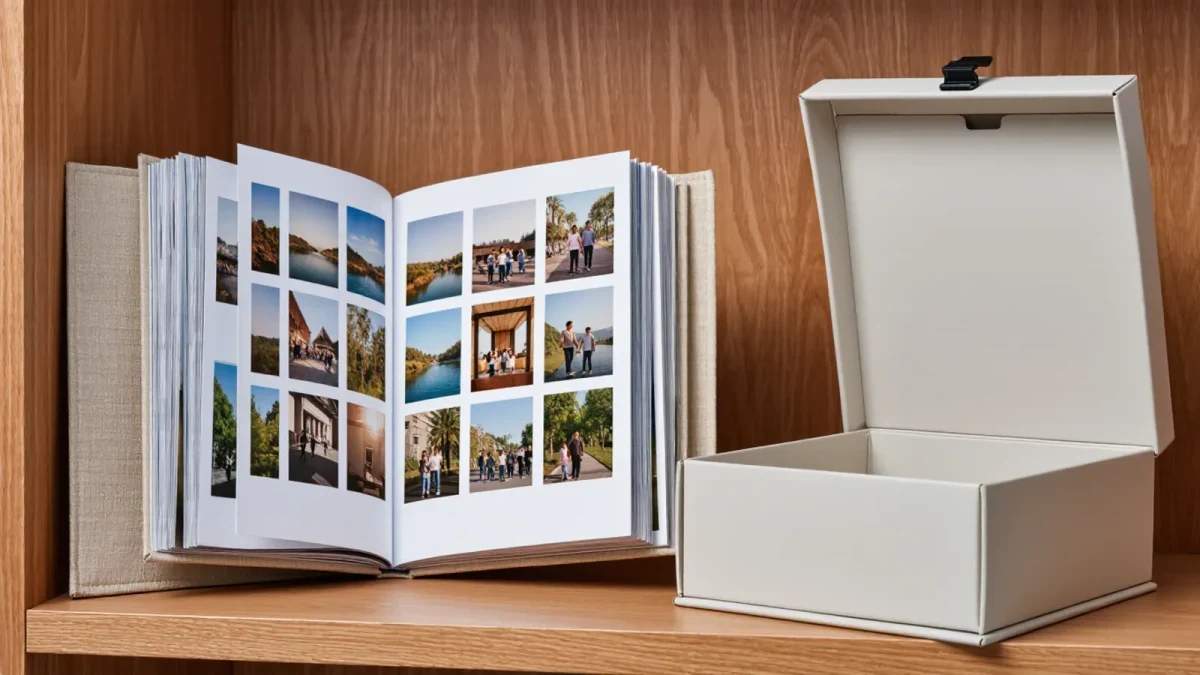
Film photography suits kids and adults who like a project. The limited frames teach patience before the shutter clicks, and the wait for prints teaches patience after. If the goal is keeping the results, a system like the one in Preserving Family Memories: A Photo-and-Stories System Anyone Can Maintain gives printed photos a home instead of a shoebox. Readers following this should also see Preserving Family Memories: A Photo-and-Stories System Anyone Can Maintain.
Paper journals are the cheapest entry point and the most flexible. A notebook, a pen, ten minutes. Kids can doodle, adults can plan, and nobody has to share it with anyone.
What does it actually cost to get started?
Here's the ownership-realism part, because the comeback has a price tag and it's worth reading before buying.
Vinyl is the big spender. A turntable, speakers and records add up fast, and records themselves cost more per album than a streaming month does. Start small: one turntable, one good speaker, a handful of used records. Film cameras look cheap used, but film and developing are ongoing costs — budget per roll, not per camera. Journals cost almost nothing, which is why they're the right first stop for most families.
The year-five question applies here too, like it does with any purchase. A cheap turntable can chew up records. A bargain film camera can leak light. Buy the boring, well-made version once instead of the flashy one twice.
How should a family start without going overboard?
Treat this like any new household routine: small, scheduled, and low stakes.
- Pick one hobby, not three. One record night, one photo walk, or one journal habit.
- Set a time slot. Sunday morning records. Saturday photo walks. Bedtime journals.
- Buy entry-level gear on purpose. If the habit sticks, upgrade later. If it doesn't, you're out very little.
- Let each person have their own version. A teen's journal is private. A parent's photo walk can be solo. Shared is optional.
- Keep the screens rule gentle. The point is adding an option, not banning a device.
For households that want more screen-free ideas in the same spirit, the broader culture section collects guides along these lines, and family activities beyond hobbies get their own coverage too.
What this means for your household
Our analysis: the analog comeback isn't a rejection of technology. It's a correction. People tried all-digital everything and found that some pleasures — music you sit with, photos you hold, pages you write by hand — don't survive the compression.
What the evidence supports is modest and useful. Cain's book, a longtime bestseller, made the case that quieter, more solitary temperaments bring real contributions that loud settings undervalue — and analog hobbies are where those temperaments get room to work. What remains unknown is how big the trend stays. Formats come and go; the impulse to make something with your hands, slowly, has been around a lot longer than any screen. Start with one evening, one object, and see who in the house asks for a second session.