Preserving family memories has quietly become a two-front project: a phone with 40,000 photos and a closet with four boxes of prints nobody can identify. The good news is that a workable system needs one evening to set up and ten minutes a month to maintain. The bad news is that nobody is coming to do it for you — future family members will only know what you label, print and save.
Why do digital photos need a plan?
Because abundance is not preservation. The Library of Congress, whose digital-preservation guidance families can borrow from, stresses the classic 3-2-1 rule: keep at least three copies of irreplaceable files, on two different types of storage, with at least one copy off-site. For a household that means phone or computer, an external hard drive, and a cloud service. Phones fail, clouds change terms, and hard drives last roughly three to five years on average — redundancy, not any single device, is what protects the pictures.
How do you sort thousands of photos without losing your mind?
Do it in passes, not in one heroic weekend:
- Delete the obvious junk first — duplicates, accidental pocket shots, fourteen near-identical versions of one sunset. This alone often cuts libraries by half.
- Rate ruthlessly. Keep the ten percent that actually tell the story of the month; a great photo works harder than a full folder.
- File by year and month — "2026-07 July" — and let face-grouping software do the sorting heavy lifting.
- Flag the heroes. Mark the twenty best shots of each year; these become prints and albums.
Should you still print photos?
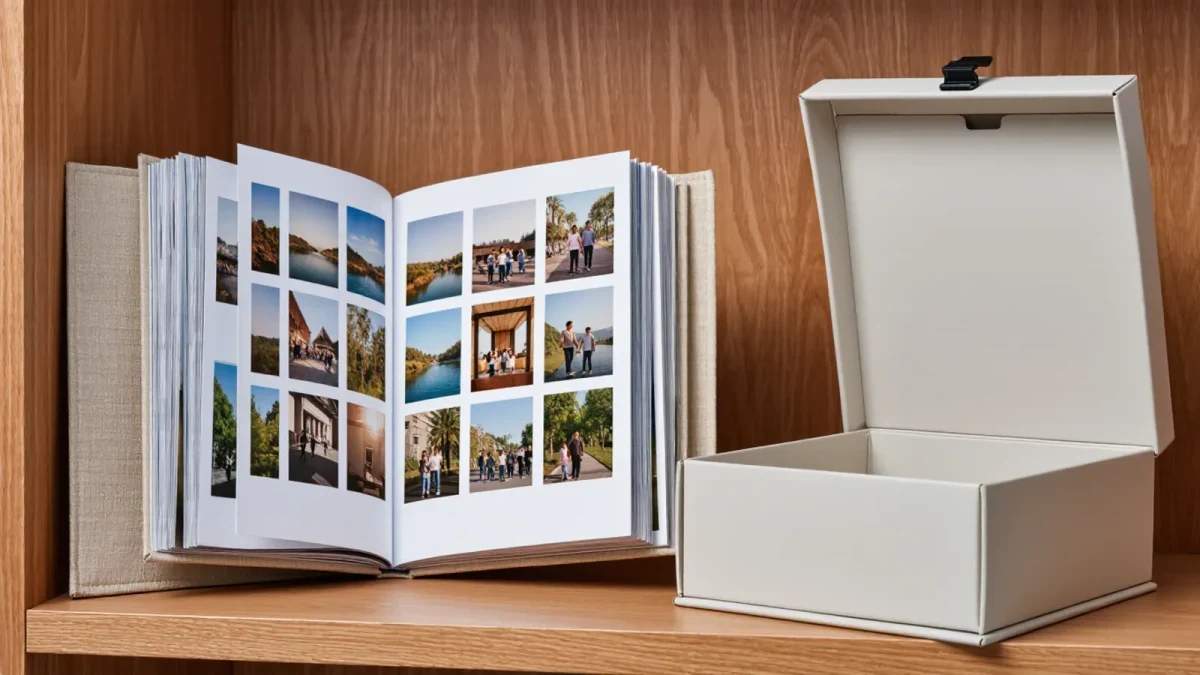
Yes — prints are the format with the best track record in human history. A printed photo needs no password, no operating system and no subscription; it survives in a shoebox for a century. Aim for a simple rhythm: one small printed album per year and a rotating frame in the hallway. Annual photo books printed from your flagged favorites take an hour to assemble and become the most-handled objects in the house by grandparents and kids alike.
What about the boxes of old prints?
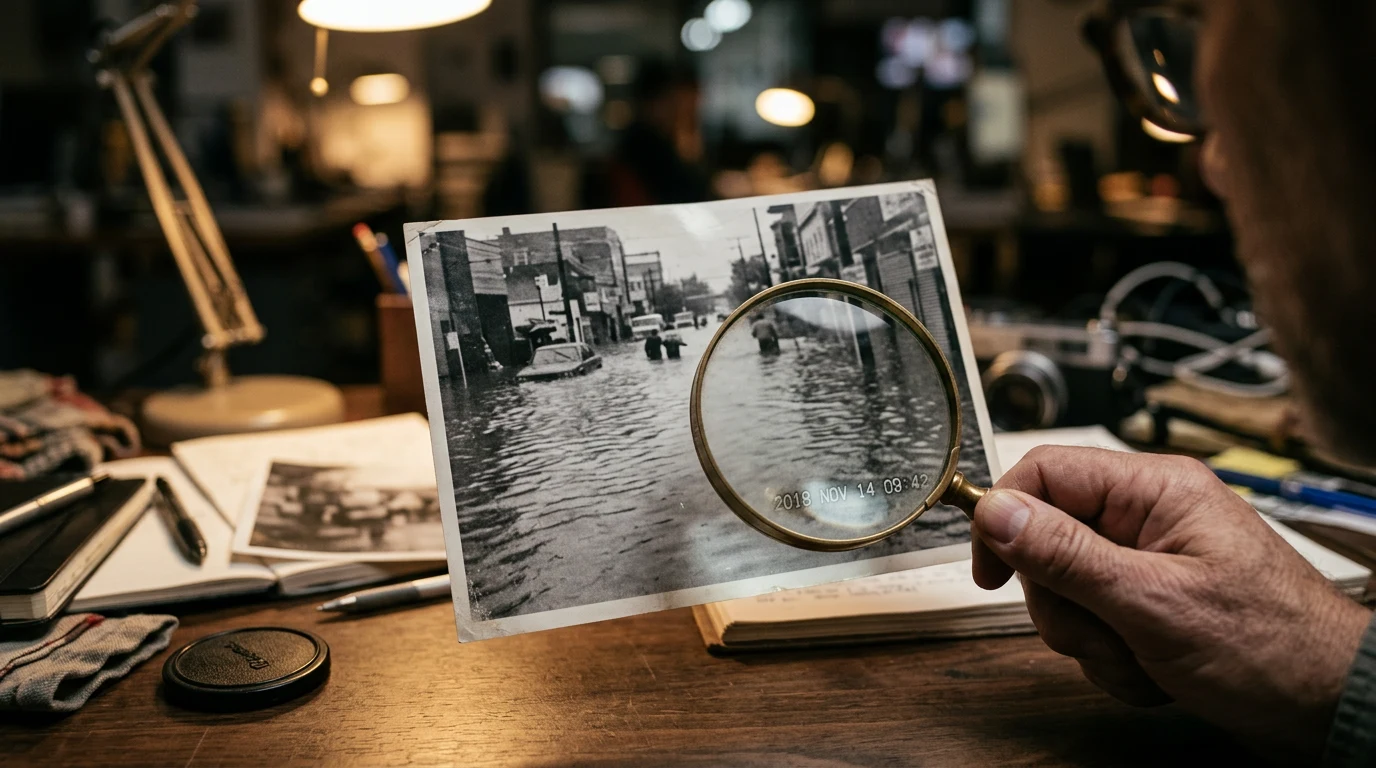
Handle them like the archive they are. Photograph or scan the most important ones before they fade — color prints from the 1970s and 80s degrade noticeably, a fact film archives have documented for decades. Store prints upright in acid-free boxes away from basements, attics and sunlight. And this is urgent for a reason beyond decay: every unnamed print loses its story a generation sooner. Write names, dates and places on the back in pencil, and ask the oldest relative available while you still can.
How do you save the stories, not just the images?
Photos need captions; stories need recordings. Three low-effort formats cover most families:
| Format | Time per entry | What it captures |
|---|---|---|
| Voice memos on the fly | 2 minutes | Kids' voices, grandparents' jokes, the story behind a photo |
| One-line memory journal | 5 minutes weekly | First words, funny quotes, small milestones |
| Annual interview | 30 minutes yearly | Each child answers the same ten questions on camera; compare across years |
The oral history tradition here is real: the Library of Congress's StoryCorps project has recorded tens of thousands of family conversations precisely because everyday voices are the most endangered media we own. Your phone's voice recorder is a professional-grade tool for this.
How do you keep the system running?
Tie maintenance to something you already do: the first of the month means ten minutes of deleting and flagging; each school year's end means assembling the photo book; each holiday visit means one recorded conversation with an elder. Put the three dates in your calendar now. Systems that piggyback on existing rhythms survive; systems that require new discipline do not.
What about home videos?
Video is the most powerful and most neglected family format. The bar is lower than anyone fears: one minute of a child talking, walking or explaining something is a complete artifact. Hold still, and let the moment run a beat longer than instinct suggests — the stumble at the end is what plays at weddings in twenty years. Trim ruthlessly later; the best family videos are short, watchable and actually watched.
Old formats need rescue first. VHS, Hi8 and MiniDV tapes degrade within decades and players are vanishing, so prioritize converting them over scanning prints; a transfer service handles this affordably, and family members often surprise you by funding it. Once digitized, videos join the same 3-2-1 backup system as everything else.
How do you involve kids in the archive?
Give them jobs with real stakes. Kids make excellent labelers, because their handwriting and spelling date the artifact as charmingly as anything; let them caption photos in their own words and decide which ten images represent their year. Interview them with the annual ten questions and let them interview you back — parents answering "what was I like as a baby" on camera is a gift their future selves will watch more than anything else in the collection. A child who helps build the family archive grows into the adult who maintains it, which is the entire succession plan.
Start tonight with one box or one month of photos, and record one story while you sort. The archive that matters is not the biggest one — it is the one with names on the back and a voice attached.