Introducing kids to music genres is less about curriculum and more about repetition with variety. Children develop musical preferences shockingly early — researchers at Cornell University and elsewhere have found that babies absorb the tonal patterns of the music they hear most, and that a genre exposed by age two starts to sound "like home." Your job is simply to widen the menu.
Why does genre variety matter for kids?
Vocabulary works for music too. A child who hears only one sound develops one ear; a child who hears folk, jazz, orchestral, reggae and rock learns to compare, categorize and name what they notice. That skill — active listening — carries straight into language, focus and memory. The National Association for Music Education has long advocated diverse listening as the entry point of music literacy, years before any instrument rental is required.
What should you play at each age?
Match the music to attention spans and body control:
| Age | What lands | Genres to try |
|---|---|---|
| 0–2 | Simple melodies, steady beat, 2–3 minute songs | Folk lullabies, soft acoustic, classical miniatures |
| 3–5 | Call-and-response, silly lyrics, dancing | Children's pop, calypso, folk, big band swing |
| 6–9 | Story songs, recognizable instruments | Country, reggae, Motown, orchestral program music |
| 10+ | Identity music, lyrics to analyze | Jazz, rock eras, hip-hop (curated), blues, electronic |
How do you actually introduce a new genre?
Use a three-step pattern that music teachers rely on:
- Name it. "This is jazz. Listen for the trumpet." One genre, one instrument, one listen.
- Play a game. Raise a hand when the drums stop; march on the beat; guess happy or sad; draw the song as squiggles.
- Connect it. Same artist at breakfast tomorrow, then again this weekend. Three exposures across a week usually locks a sound into the "liked" column.
What are good gateway songs by genre?
Think gateway, not greatest-hits exam. For orchestral, start with "Peter and the Wolf" — every character has an instrument, which teaches timbre without a lecture. For jazz, big-band swing counts as a party game. For reggae, anything with an obvious one-drop rhythm invites bouncing. For country and folk, story songs about animals and roads do the work. The one rule: start with clean, kid-appropriate tracks, then read lyrics before the deep cuts — 10-year-olds will absolutely memorize them.
How much screen time does this need?
Almost none. A basic speaker in the kitchen and the car covers ninety percent of the plan. Background variety during breakfast, homework-free Saturday mornings and slow cooker Sundays build more musical fluency than any app, because the music attaches to real memories. Save lyric videos and performances for the occasional family watch — a live orchestra clip or a vintage concert film makes a great popcorn night.
What about making music, not just hearing it?
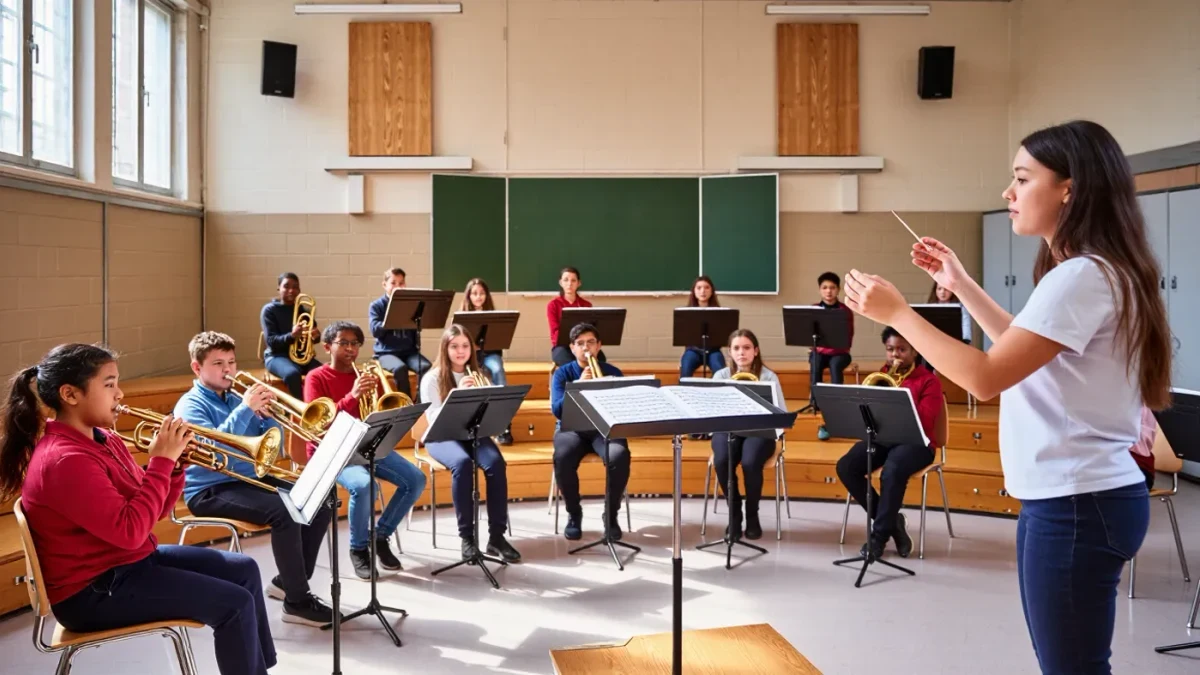
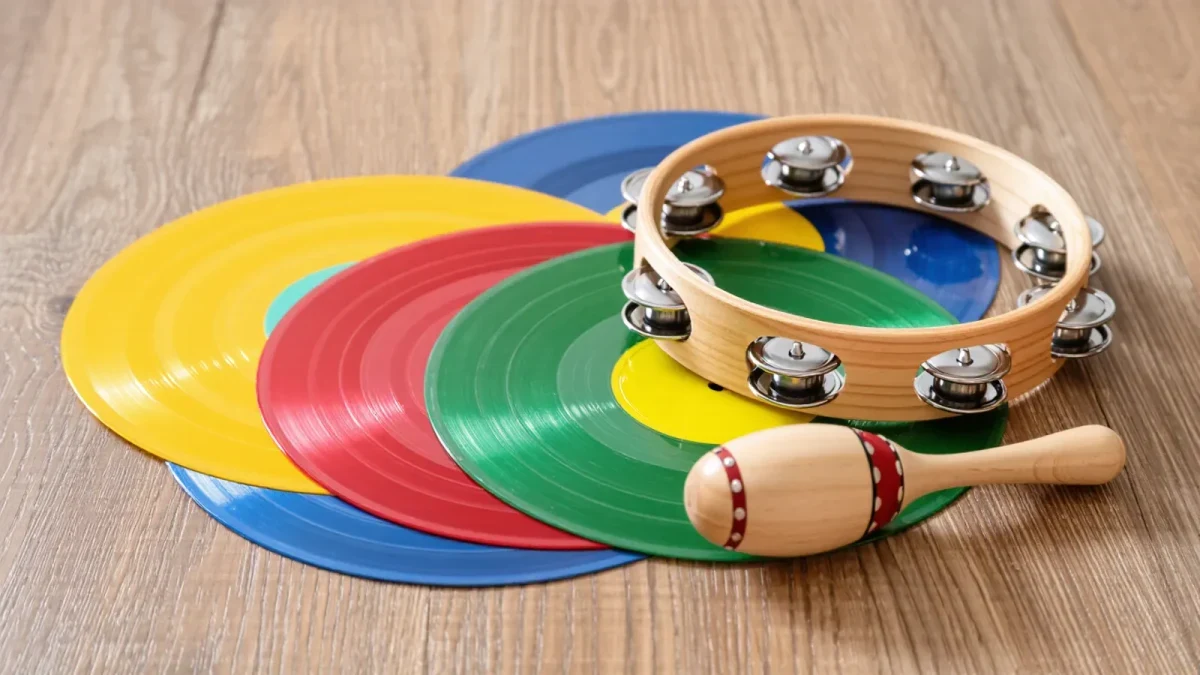
Instruments before lessons: a basket of shakers, a cheap keyboard and a djembe from a secondhand shop let kids imitate what they hear. Around age seven or eight, many children have the fine motor control for formal lessons, and their genre knowledge suddenly pays off — the piano teacher asks what they want to play, and they have an actual answer.
How do you talk about music without lecturing?
Ask, do not tell. "What does this make you want to do?" "Was that a happy song or a sneaky song?" "Which instrument was the boss?" Children who describe sound build opinions; children who are described at build resistance. Keep the commentary light and let odd opinions stand — a six-year-old who insists polka is the greatest music on Earth is doing genre identification perfectly.
How do you build a family listening routine?
Ritual beats random shuffle. Attach one genre to one recurring moment: jazz while pancakes cook on Sunday, classical during homework, reggae on Friday cleanup, folk on road trips. Within two months children start requesting the pairing itself — the music becomes the smell of the occasion. Rotate a family DJ spot at dinner where one member plays a single chosen song and answers one question about it, which takes four minutes and trains both taste and articulation.
Keep a running family playlist that anyone can add to. It becomes a time capsule on its own: play last year's version and let the kids cringe lovingly at their former obsessions.
What about live music for kids?
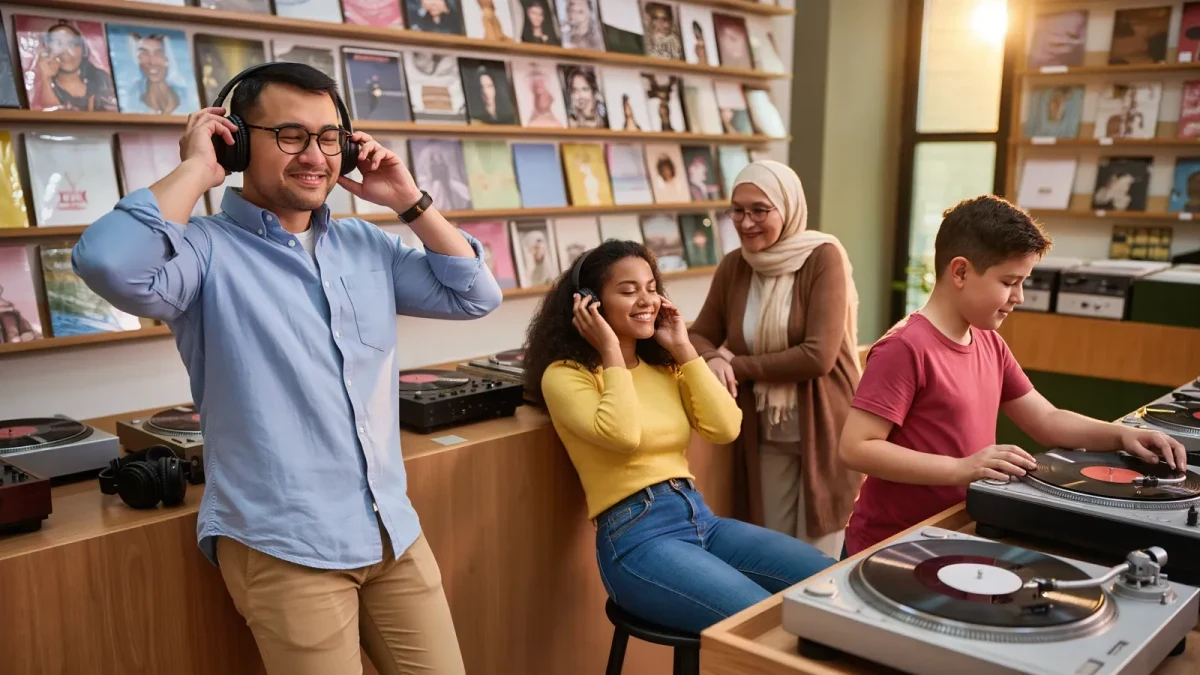
Concerts complete the loop, and they do not need to be expensive. Free bandshell and park concerts in summer, library music programs, school performances and street festivals give children the physical feeling of live sound, which no speaker reproduces. Sit near the back, bring headphones for sensitive ears, and stay for twenty minutes if that is all the attention available — a partial concert still beats a full none.
Finally, share your own favorites honestly. "This was the song at my eighth-grade dance" is a story, and stories are what make music stick for a lifetime. Rotate who picks the playlist, keep the options moving, and in a few months you will have the rarest household artifact: a kid who asks, "What genre is this?"