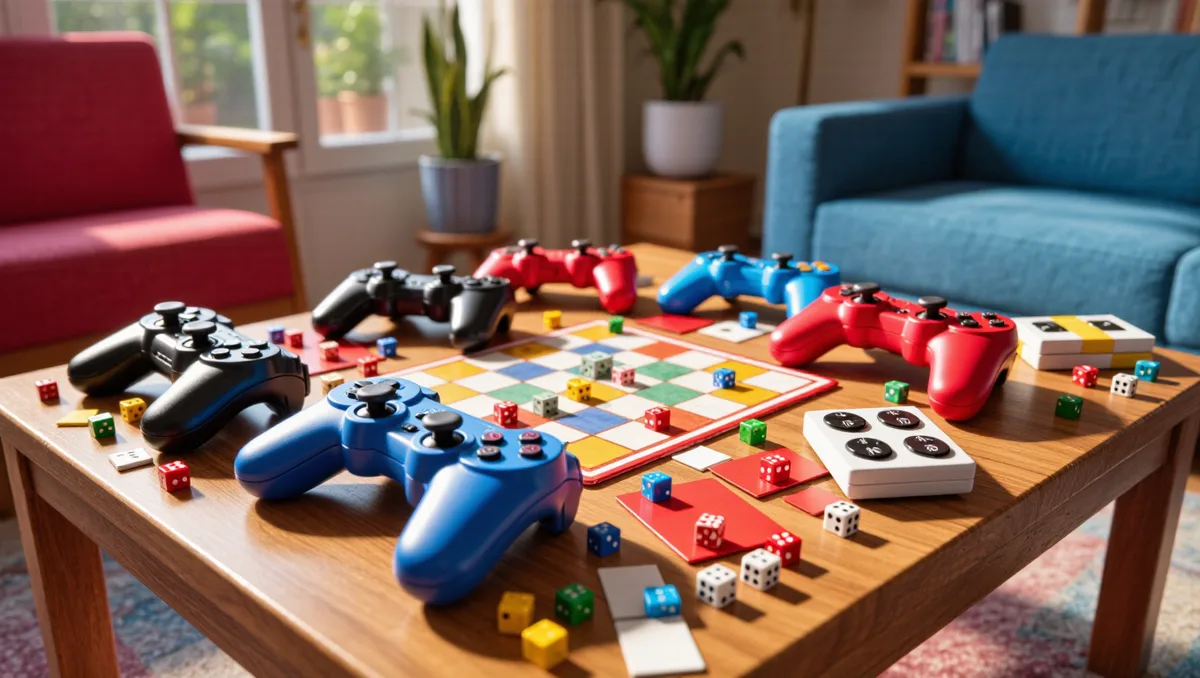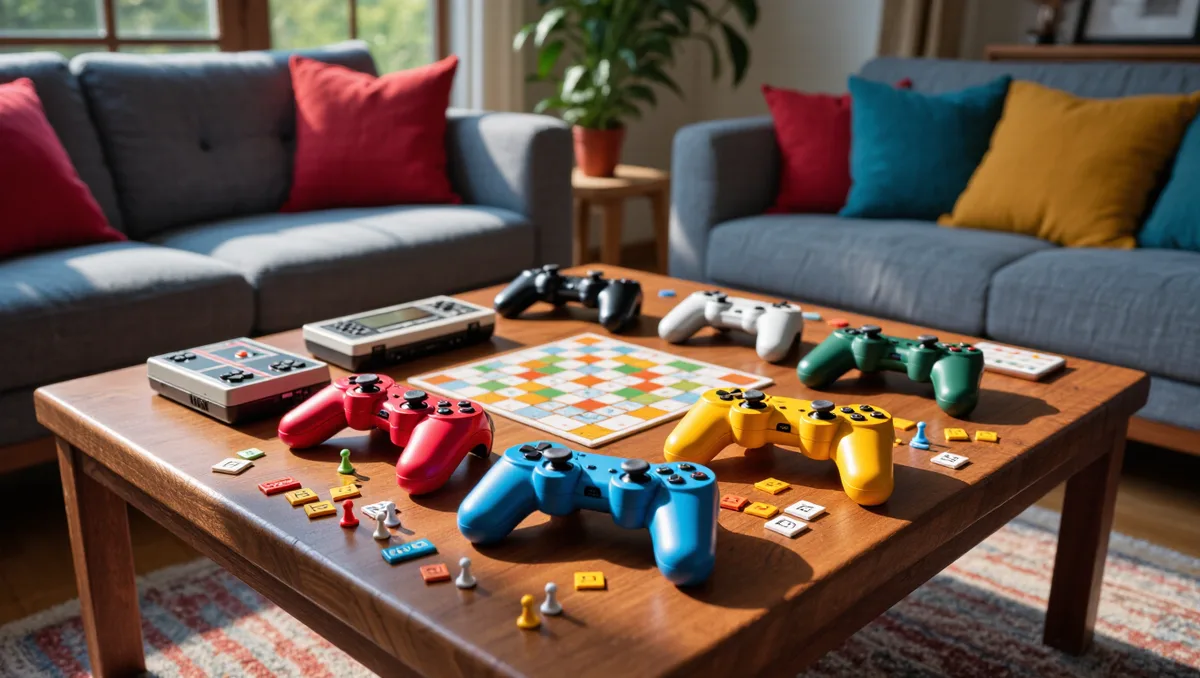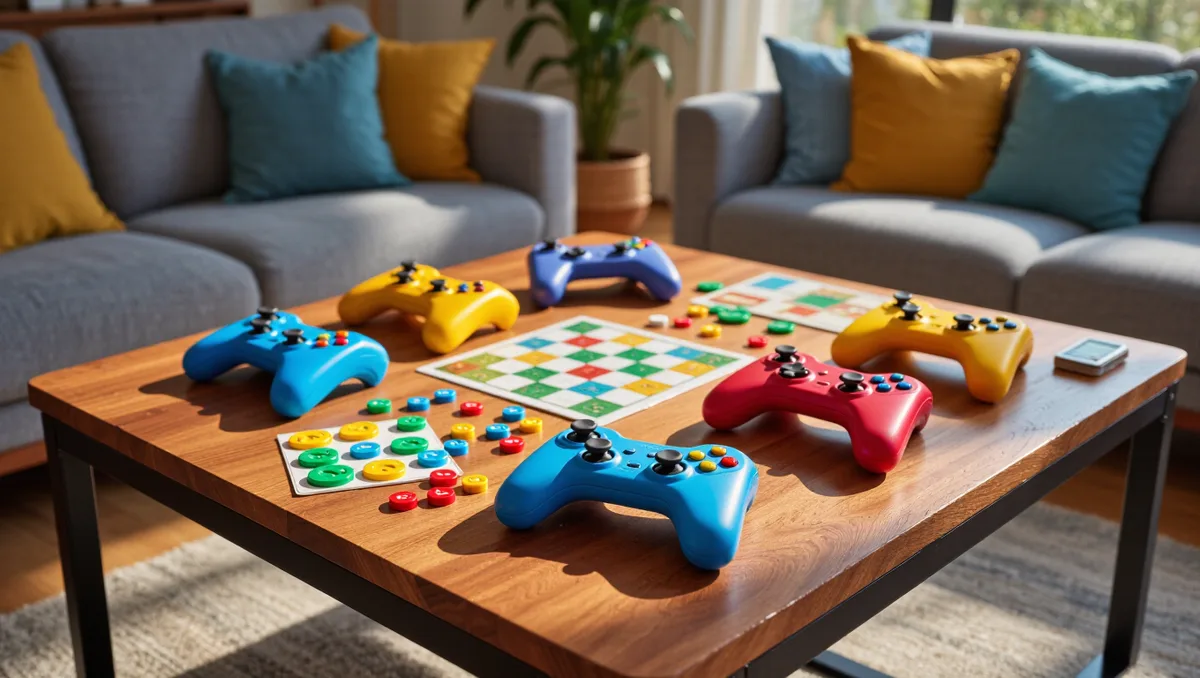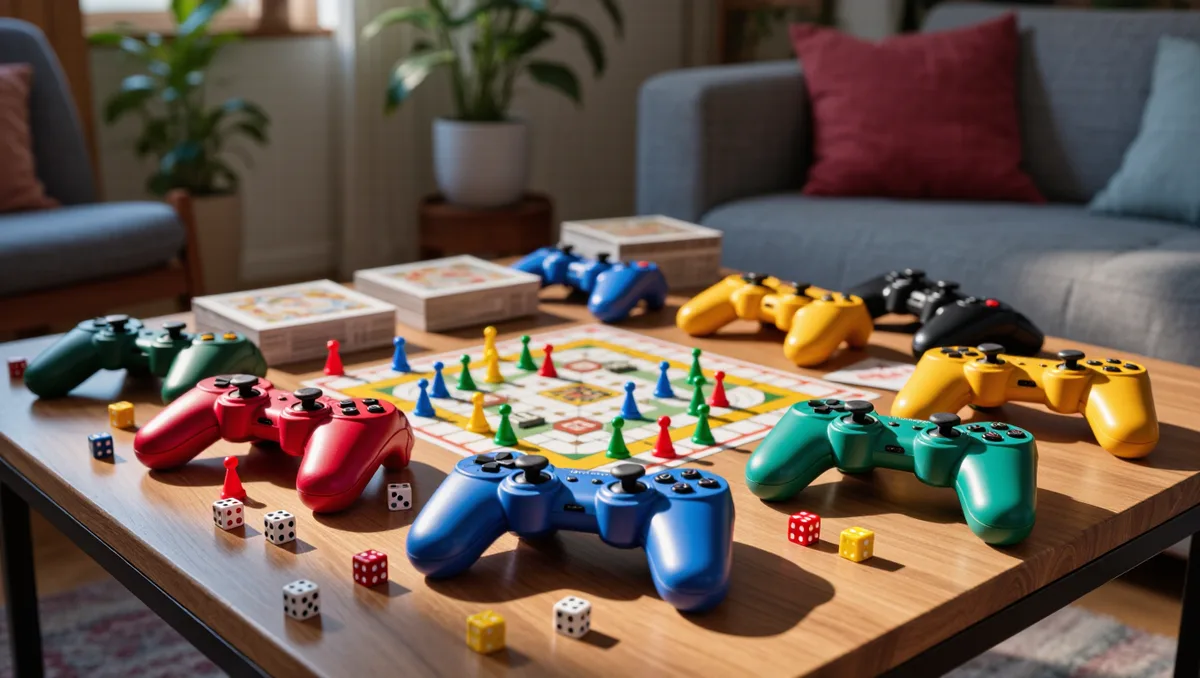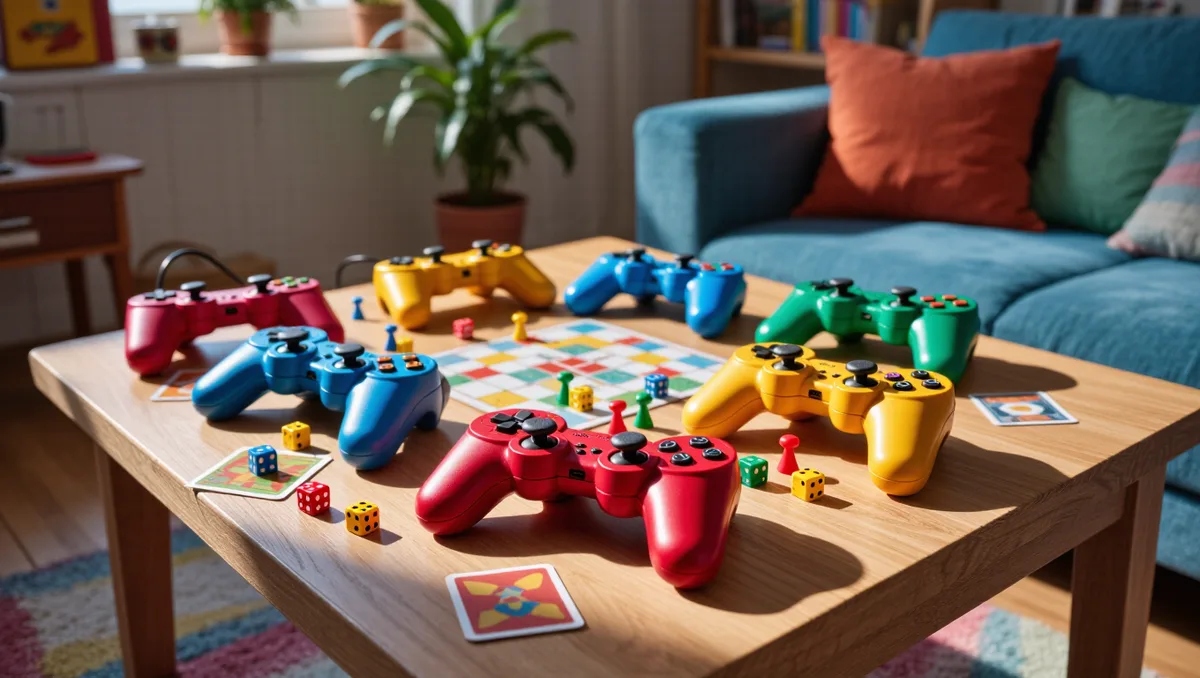
Rain taps the window, the tablets sit fully charged and boredom is close behind. This is the moment for a box, a board and a pile of pieces. A good board game turns a stuck-at-home day into the best kind of family time.
You do not need a huge collection to win the weekend. You need a small shelf with the right variety. Here is why boards beat screens on gray days, and how to choose games your family will actually finish. This connects to our earlier piece, Board Games vs. Video Games for Family Night: Which Should You Choose?.
Why Boards Beat Screens on a Rainy Day
A board game is a tabletop game played with small pieces moved across a patterned board, sometimes with dice or cards, according to Wikipedia. Everything happens on one table, face to face. Players talk, tease and read each other in a way screens rarely invite. When the weather cancels outdoor plans, that close contact matters most. No battery dies and no update waits in the middle of a match, either.
The habit is far older than you might think. Wikipedia notes that archaeologists have traced game boards back to the Neolithic period, with finds now reported at more than a dozen sites. Families have been playing through bad weather for a very, very long time.
Build a Shelf for Every Mood
Variety is what keeps a rainy-day shelf useful, so mix pure luck with pure skill. Wikipedia lists games like Candy Land and snakes and ladders as decided purely by luck, while chess depends completely on player skill. Luck games give the youngest child a fair shot at winning. Skill games give older players something to chew on. For related coverage, see The Best Four-Player Party Games for One Couch.
Add games that blend the two. Wikipedia notes that many games mix skill and luck, and that a bit of luck can make play more exciting while letting different strategies shine. A good blend keeps a wide age range in suspense until the final turn.
Know the Classics Worth Teaching
Some games earn their place in the cupboard over generations. Wikipedia calls the years from the 1880s to the 1920s the Golden Age of board games, when mass production made them cheap and easy to find, and names Monopoly, first sold in 1935, as the era's biggest seller. About 500 million games of Monopoly had been played as of 1999, according to Wikipedia.
Newer classics matter too. Wikipedia credits Catan, released in 1995, with carrying German-style board games far beyond Europe, and counts Carcassonne and Ticket to Ride among the titles behind a modern board game revival. Trading adds flavor as well; in Catan, according to Wikipedia, a big part of the game is convincing other players to trade with you rather than with anyone else.
Match the Box to the Moment
Rainy weekends need different tools for different hours. Short luck-based games fill the gap before lunch. Longer strategy games can claim a whole afternoon. Check the box for player count and play time before you start, and be honest about the group's patience. A game that outlasts its welcome sends everyone straight back to their screens.
Storage counts more than people think. Keep the boxes upright where kids can reach them, and hold wobbly lids shut with rubber bands. A game that is easy to grab gets played far more often.
Teams change the mood as well. Pair a strong reader with a brand-new player, or let older kids run the bank. Give every age a role and nobody drifts off to a corner.
Conclusion
Screens will always be ready, but they rarely pull a whole family to one table. A small, well-chosen game shelf does it every time. Blend luck, skill and trading games, respect short attention spans and teach the classics slowly. Do that, and the next gray forecast becomes something to look forward to.