Board games win family night when you want conversation, zero screen time, and something grandparents and cousins can join instantly; video games win when energy is high, time is short, or your kids are spread across a wide age gap. For most families, the honest answer is not either/or — it is a hybrid rotation, roughly one or two board game nights and one or two video game nights per week, with each format doing what it does best. Here is the breakdown that will help you decide which is which in your house.
What do board games do better than video games?
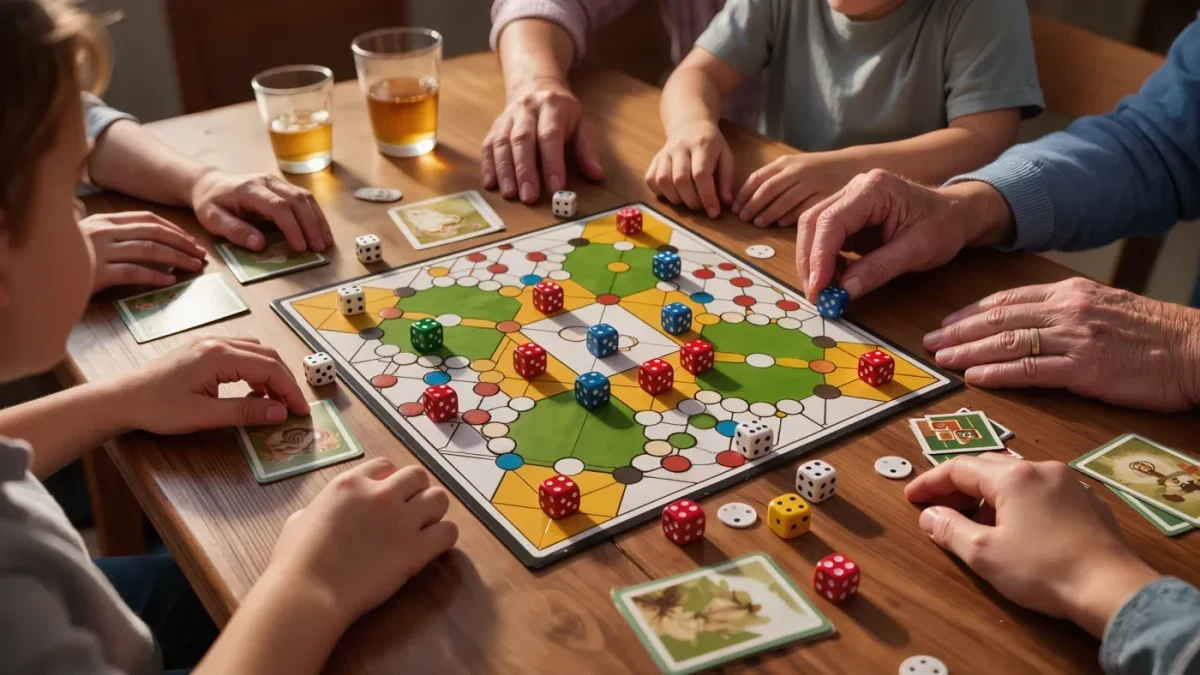
Board games are unmatched at producing face-to-face conversation. Everyone is looking at the table, not a screen, and the slow pace leaves room for the actual talking — the school stories, the jokes, the negotiations. There is also no setup password, no download, and no controller battery at 3 percent; a modern board game like Ticket to Ride or Sushi Go! opens and plays in minutes.
Board games also teach different skills. Classic titles build arithmetic, pattern recognition, and reading; modern strategy games like Kingdomino (ages 8+) build spatial planning and light resource math. Losing is more visible and more social at a table, which — painfully — is exactly why it is such good practice for kids.
Finally, board games scale across generations in a way most video games cannot. A 68-year-old grandmother and a 7-year-old can both be competitive at Taco Cat Goat Cheese Pizza; handing grandma a controller in a four-player platformer rarely goes as well.
What do video games do better than board games?
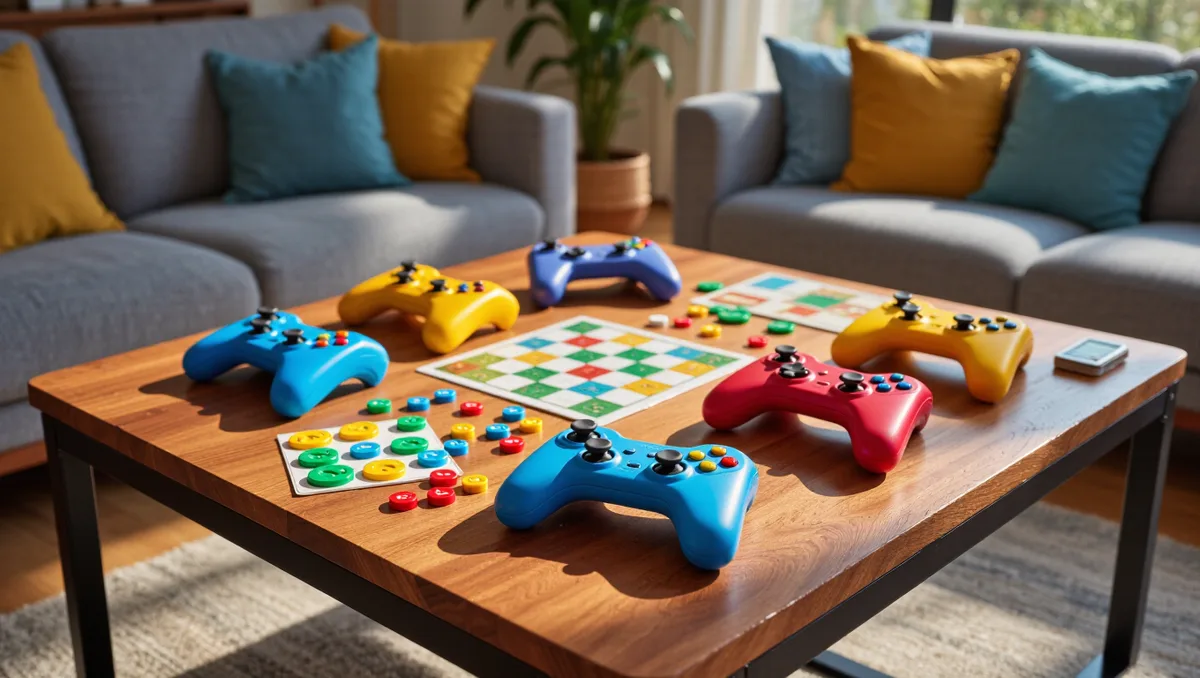
Video games handle the energy problem. After a rainy day indoors, four kids with excess energy will destroy a board game night but will happily burn two hours in a four-player game of Overcooked! 2 (ESRB E10+). Cooperative video games let the whole family win or lose together against the game itself, which sidesteps the sibling blowups that competitive board games can trigger.
Video games are also more forgiving of tired parents. A game handles the rules enforcement, so you are not refereeing whether that word is in the dictionary. And age gaps matter less in a well-chosen co-op: a 6-year-old with steering assist can genuinely contribute in Mario Kart 8 Deluxe (E), while that same child is usually dead weight in a strategy board game.
There is a social payoff specific to gaming, too. Kids who game often want to share it with parents, and a weekly co-op session gives you a window into their world — including the games their friends are talking about at school.
How do the two compare side by side?
| Factor | Board games | Video games |
|---|---|---|
| Setup time | 2-10 minutes | Instant once installed |
| Conversation | Excellent — constant | Good in co-op, less in solo screen |
| Screen time | None | Yes — counts against limits |
| Cost per title | $15-50 | $20-60, plus console |
| Best energy match | Calm evenings | High-energy evenings |
| Age range in one session | Harder with big gaps | Easier with assist features |
What are the downsides parents should know about?
Board games have two classic failure modes: the rulebook wall (some modern games take a first session to learn, and impatient kids bounce off) and the sore-loser meltdown, which is more exposed at a table than behind a controller. Video games' downsides are equally well documented: screen-time friction, occasional in-game purchase pressure, and the siren call of "one more match" at bedtime — which is why parental control time limits exist on every modern console.
Neither format fixes parenting by itself. Both work best with a fixed start and end time agreed before play begins, a rule that solves about 80 percent of family-night conflicts in either medium.
What does a hybrid family night rotation look like?
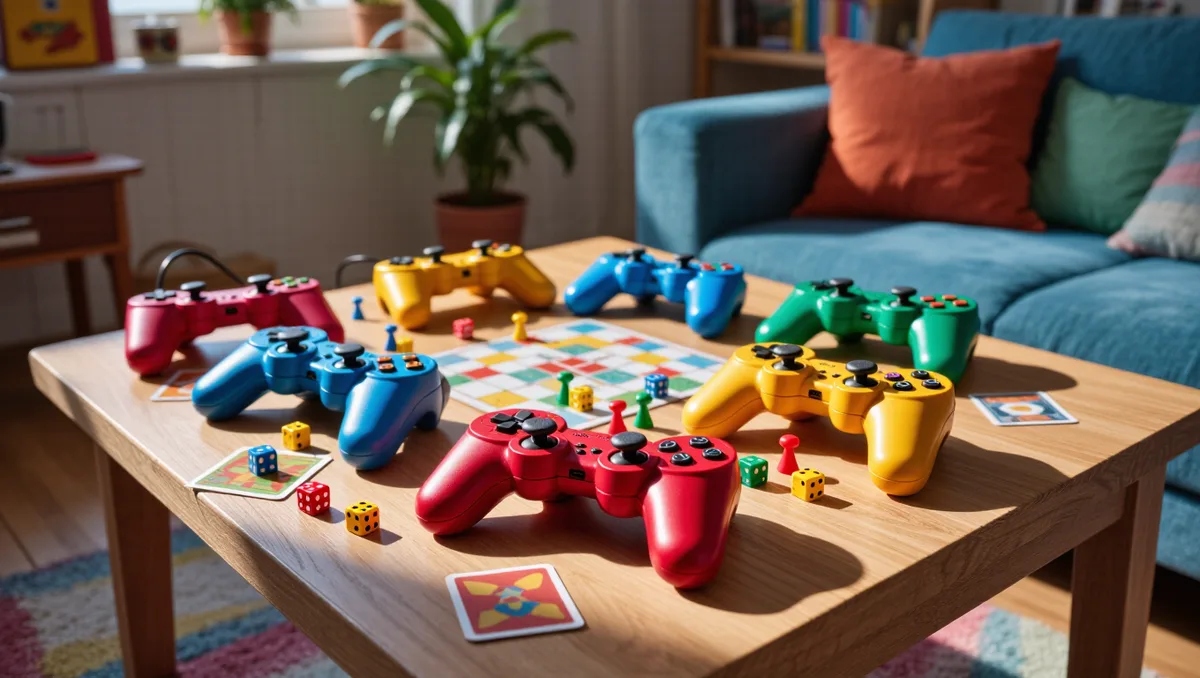
The pattern that works for most households is format-matching: choose the medium that fits the evening rather than defending one tribe. A sample week:
- Sunday — board game night with one longer title (Ticket to Ride, Catan with teens) while dinner cooks.
- Wednesday — 45-minute co-op video game session (Overcooked! 2 or Minecraft) with a hard stop set by console parental controls.
- Friday or Saturday — family pick: rotate who chooses the format, which keeps both kids and parents honest about trying the other side.
Add a quick-card filler like Sushi Go! or Taco Cat Goat Cheese Pizza to the shelf for nights when a 60-minute game is not realistic, and keep one reliable co-op video game installed for exactly the same reason.
Which one should your family start with tonight?
If your kids are 10 or under and arguments run hot, start with a cooperative video game — losing together to a cartoon kitchen builds teamwork before you introduce direct competition. If your kids are 10+ and can handle losing gracefully, start with a modern board game night; the conversation payoff is bigger than any screen can offer. And if you already own a console and a couple of decks or boxes, you do not have to choose at all. Rotate formats, alternate who picks, and let each medium do the job it is genuinely best at. The family that plays both usually keeps the tradition going the longest — because nobody, adult or child, gets bored of always doing it one way.