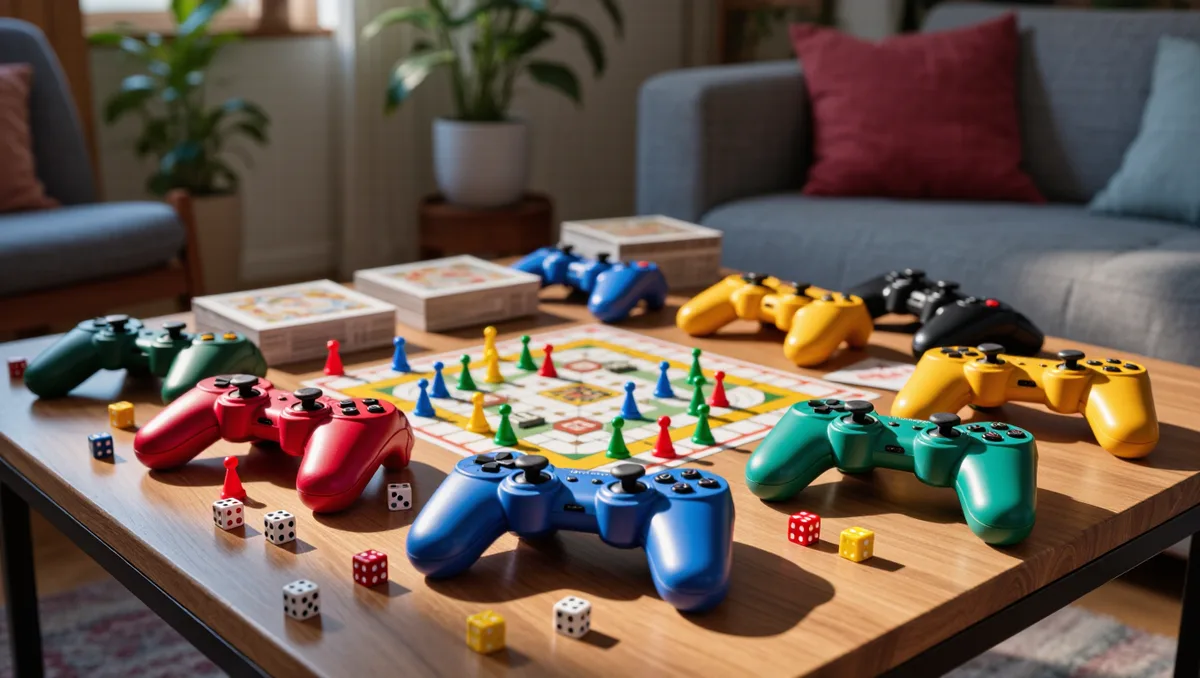
Yes — you can fill a whole holiday gathering with games that take under five minutes to explain, need nothing but people and maybe a scrap of paper, and work for mixed ages. The trick is picking games where the rules fit in one sentence and the fun starts on the very first turn.
Below is a lineup of classic games to play, ranked roughly by how many people they need and how much chaos they create. Every one of them is free, needs no setup beyond clearing a little floor space, and can be learned while you're standing in the kitchen waiting for the oven.
A party, in the plainest sense, is just a social gathering — Merriam-Webster defines it as a gathering for socializing and recreation, which is exactly the territory these games live in. And as Wikipedia's overview of parties notes, gatherings often feature food, music, and other forms of entertainment — a quick round of a simple game slots right into that mix without taking over the whole event.
What makes a game learnable in five minutes?
Three things. First, one-sentence rules: if you can't explain it in a single breath, most of the room has already checked out. Second, no equipment, or nearly none — anything you have to hunt for kills the momentum. Third, instant feedback: players should understand why they won or lost within the first round, not after twenty minutes of scoring.
The games below all pass that test. They're also forgiving of mixed groups, which matters when your gathering includes a seven-year-old, a teenager glued to their phone, and a grandmother who hasn't played anything since Parcheesi.
Which games work for small groups of four to six?
Smaller groups do best with games where everyone talks and everyone listens. For related coverage, see The Best Family Split-Screen Couch Co-Op Games: A Parent's Guide.
- Two Truths and a Lie. Each person says three statements about themselves; the group guesses which one is false. Zero equipment, works with any age, and the reveal always gets a reaction.
- Charades. One person acts out a word or phrase without speaking; their team guesses. Split into two teams, keep a simple tally on paper. The classic for a reason — it scales down to four people without losing anything.
- Categories. Pick a theme — pizza toppings, cartoon characters, things in a garage. Go around the circle; anyone who repeats an answer or stalls is out for that round. Great filler while dinner finishes.
- Twenty Questions. One player thinks of something; the group gets twenty yes-or-no guesses. Quieter chaos, which is handy after the sugar wears off.
None of these needs a table, which makes them perfect for the post-meal slump when everyone has migrated to the couch.
What should bigger groups play — eight or more?
Once your headcount climbs past eight, turn-based games drag. You want games where everyone plays at once, or where the action moves fast.
- Telephone. A phrase whispers down a line of players; the final version gets announced out loud. The bigger the group, the funnier the garble. Works standing in a hallway.
- Simon Says. One leader issues commands only when prefaced by "Simon says." Anyone who moves on an unqualified command sits out. Younger kids are often shockingly good at this, which the adults find humbling.
- Freeze Dance. Play music, everyone dances, music stops, everyone freezes. Anyone caught moving is out. Needs only a phone and a speaker, and burns off kid energy before bedtime becomes a problem.
- Scavenger Hunt (lightning round). Call out a household object — "something red," "a spoon," "a left shoe" — and the first person to bring it to you wins the round. Indoors only, and set ground rules so nobody is sprinting through the dining room with the good china.
These are the high-chaos picks. They're loud, they involve movement, and they're best earlier in the evening rather than last thing before bed.
How do you match the game to the moment?
Think of it like matching a car to a job. A minivan and a sports coupe both drive, but you don't take the coupe to pick up lumber. Same logic here:
| Moment | Best picks | Why |
|---|---|---|
| Guests arriving, people scattered | Two Truths and a Lie, Categories | Low commitment, join-in-whenever |
| Everyone seated after dinner | Charades, Twenty Questions | No movement, works around a full table |
| Kids getting restless | Freeze Dance, Simon Says | Physical, burns energy fast |
| Big mixed-age crowd | Telephone, Scavenger Hunt | Scales up without slowing down |
If your family prefers screens to charades, we've got you covered there too — our guide to The Best Four-Player Party Games for One Couch handles the video-game side of the evening, and The Best Family Split-Screen Couch Co-Op Games: A Parent's Guide covers longer sessions.
What this means for your holiday plan
Our analysis of what makes these gatherings work comes down to one thing: keep the barrier to entry at zero. The best game at any party is the one already explained before the skeptics found their coats. A few practical steps:
- Pick two games before guests arrive — one calm, one loud — so you're never deciding on the spot.
- Explain the rules while people are already standing or already seated. Don't gather a fresh circle for a rule lecture.
- Quit while it's fun. End any game one round before interest fades, and people will ask to play it again.
- Let the kids lead sometimes. A seven-year-old running Simon Says is better entertainment than anything you can organize yourself.
None of this costs a dime, and none of it needs a shopping trip — though if you're stocking up on decorations and serving supplies for the gathering itself, big-box retailers like Walmart's party and occasions section carry the banners, balloons, and plates that set the scene while the games handle the entertainment.
The bottom line for your gathering
The evidence here is simple and durable: the games that survive generations are the ones with one-sentence rules and no equipment. Charades, Telephone, Simon Says, and their cousins need nothing but a group willing to be a little silly. Start with one calm game as people arrive, switch to a loud one when the room needs energy, and stop before anyone's had enough. That's the whole strategy — and it costs exactly five minutes to learn, every time.