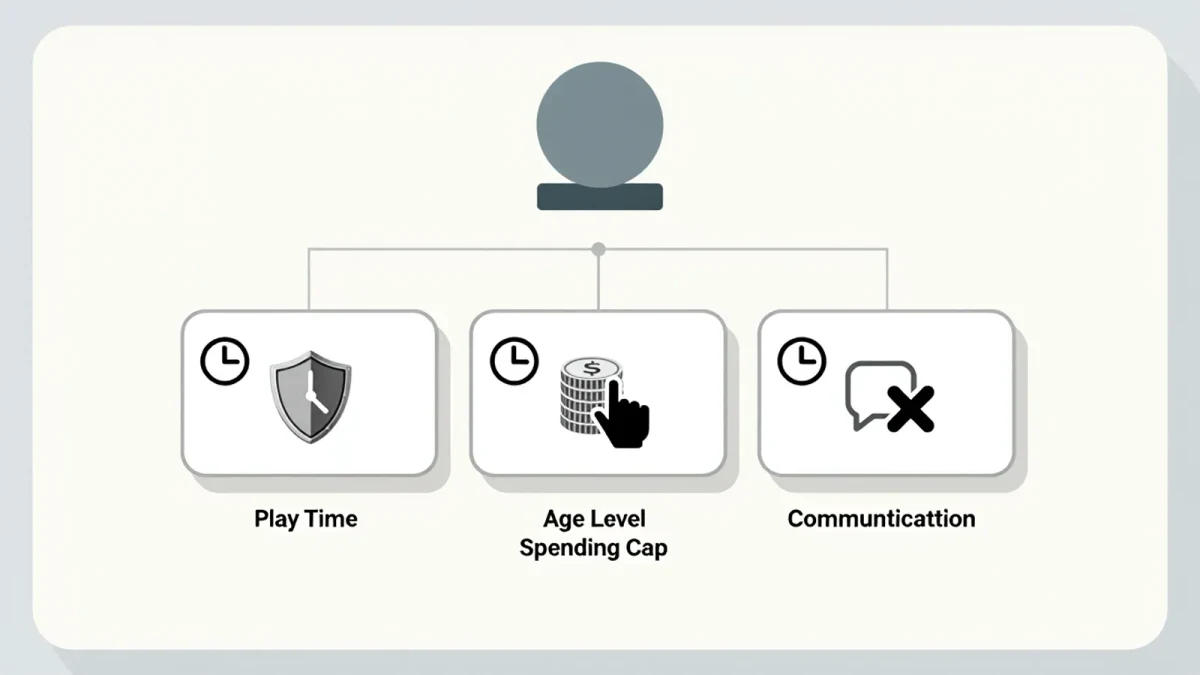
For a first family console, the short answer is: Nintendo Switch (or the newer Switch 2, launched June 2025) if your kids are under 10 or you value couch co-op and portability; PlayStation 5 if your household skews teen-plus and wants the biggest exclusive blockbusters; Xbox Series X|S if you already live in the Microsoft ecosystem or want the cheapest capable entry (the Series S). All three consoles carry equivalent parental controls — play-time limits, age-based content restrictions, and spending caps — so the decision comes down to games, ages, budget, and how and where your family actually plays.
What should a family decide before comparing consoles?
Four questions settle 80 percent of the decision before you read a single spec sheet:
- How old are your kids? Under 10 strongly favors Nintendo's E-rated library; 13+ opens the door to PlayStation and Xbox catalogs.
- One TV or many rooms? A handheld-capable Switch works in the car, a bedroom, and a hotel; a PS5 or Xbox is anchored to a television.
- Who else owns consoles? Kids mostly play what their cousins and friends play; multiplayer with real friends outweighs any review score.
- What is the real budget? The console is the entry fee: add a second controller ($50-70), one or two games ($60-70 each), and possibly an online subscription ($20-80/year depending on platform and tier).
How do the three consoles compare for families?
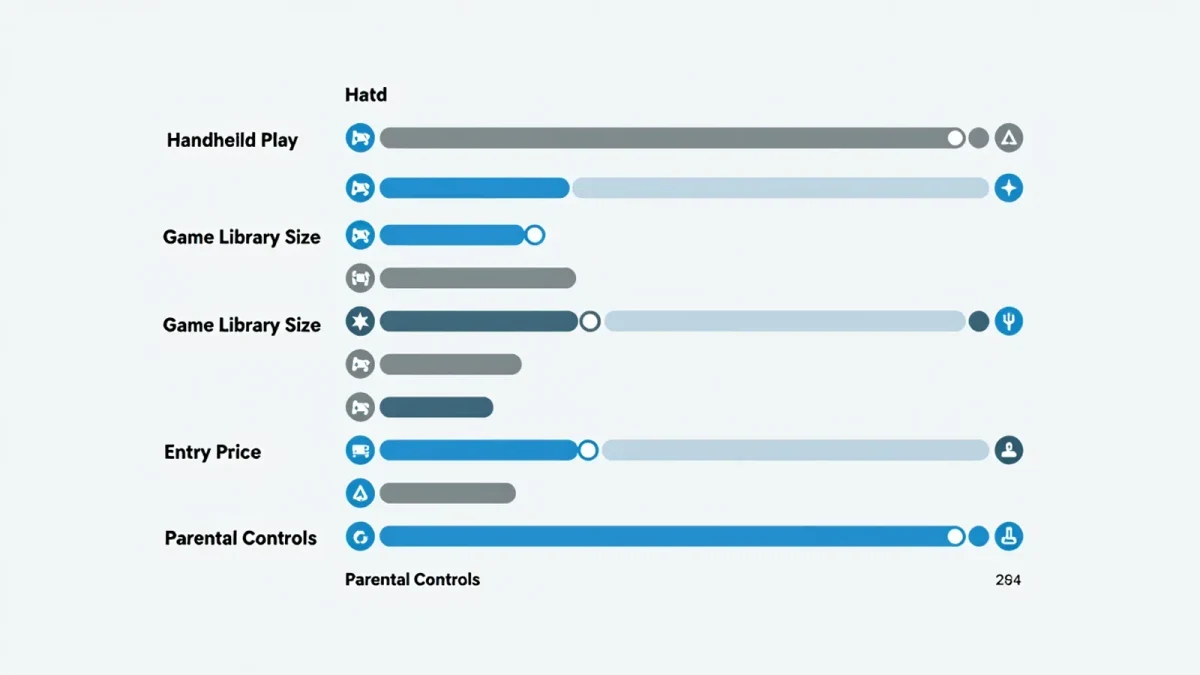
| Factor | Nintendo Switch / Switch 2 | PlayStation 5 | Xbox Series X|S |
|---|---|---|---|
| Family game library | Best E/E10+ couch co-op catalog | Strong, skews teen/adult | Broad, skews teen/adult |
| Handheld play | Yes — core feature | No (PS Portal streams only) | No (handhelds play streamed/remote titles) |
| Entry price tier | Lowest barrier for 4-player (Joy-Cons included) | Higher, disc or digital models | Series S is the cheapest HD entry |
| Parental controls | Full, via phone app | Full, family manager | Full, plus weekly reports |
| Best for | Kids under 10, family co-op | Teens, exclusive blockbusters | Value, Game Pass families |
Why do families with young kids usually end up with a Switch?
The library is the reason, and the library is unmatched. Mario Kart 8 Deluxe, Super Mario 3D World, Animal Crossing: New Horizons, and Mario Party Superstars — all ESRB E, all four-player on one couch — exist only on Nintendo hardware. No other platform has remotely as many great games rated E. The included Joy-Cons double as two controllers out of the box, so the true four-player cost is lower than it looks, and the whole system moves between the TV and a child's hands without buying anything else.
The June 2025 launch of Nintendo Switch 2 brought a more powerful system with a bigger screen and backward compatibility with nearly all original Switch games, per Nintendo's published compatibility information — so new buyers are choosing between a premium Switch 2 and a cheaper original Switch (including OLED), both running the same family library. For a first console for a 6-year-old, either is a safe buy; the original saves real money.
When is PlayStation 5 the right family choice?
When the kids are teenagers or the family's gaming is genuinely shared across ages. The PS5 has the strongest lineup of big exclusive adventures, and its catalog includes excellent family fare — Sackboy: A Big Adventure (E) among them — even though its center of gravity sits at T and M ratings. It is also the console most likely to already be in your teen's friend group, which for a 14-year-old matters more than any parental preference. The tradeoffs: no handheld mode, a higher entry price, and a first-party library with fewer four-player couch titles for young kids.
When does Xbox make the most sense?
Two scenarios. First, the value play: Xbox Series S is the least expensive current-generation console, and a Game Pass subscription turns it into an all-you-can-play library for a flat monthly fee — a strong fit for families who want variety without $70 purchases. Second, the ecosystem play: if the family already uses Windows PCs, Microsoft accounts, and the Xbox Family Settings app's screen-time tools (which extend across console and Windows gaming), Xbox consolidates everything under one parental roof. The limitation mirrors PlayStation's: the E-rated, young-kid, four-player-couch catalog is thin compared with Nintendo's.
What about parental controls — do they differ?
Functionally, no, and that should comfort every parent weighing this decision. Nintendo offers the Parental Controls phone app with play-time limits and bedtime alarms; PlayStation routes everything through a family manager account with per-child play-time and age-level restrictions; Xbox's Family Settings add weekly activity reports and per-app time budgets. All three enforce spending limits and communication restrictions. Whichever console you choose, budget thirty minutes on day one to set these up — the setup process on each platform is covered in platform-specific guides, and it is the single highest-return half hour of family gaming.
So which one should you actually buy?
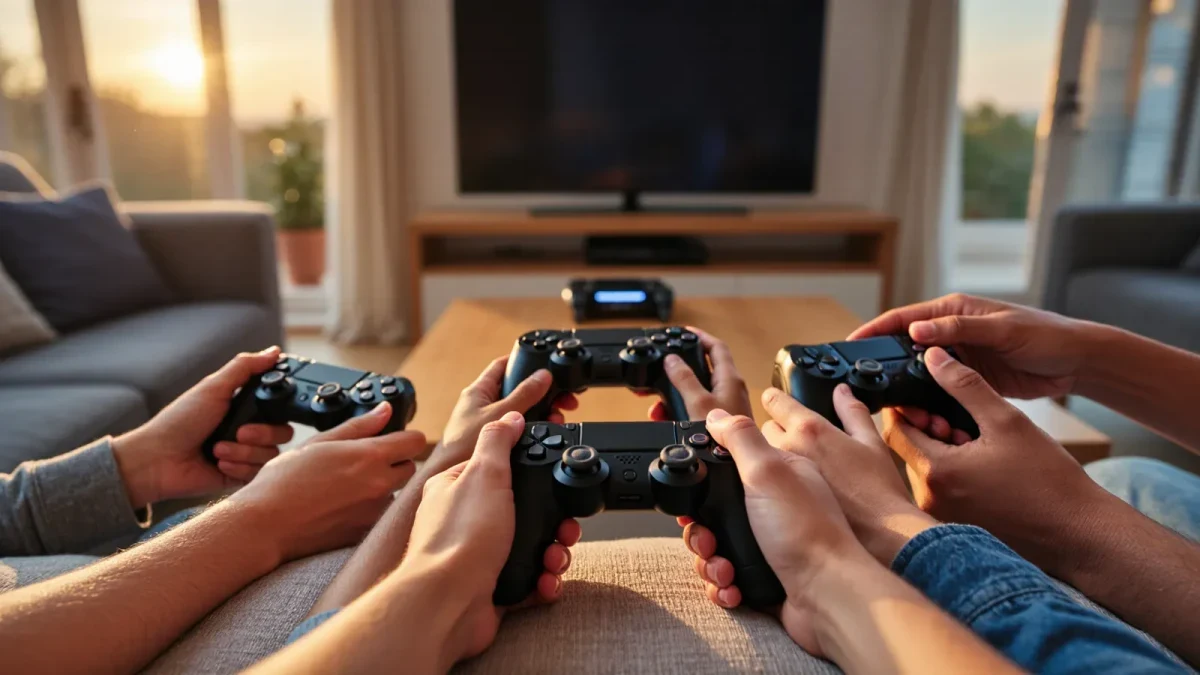
If your eldest child is 10 or under, buy a Switch — the games your family will play for the next three years live there and nowhere else. If your kids are 13 or older and graphics-heavy adventures matter, buy a PS5, ideally the model your budget allows after one extra controller. If value and library breadth top your list and your kids are tweens, the Series S plus Game Pass is the smartest dollars-to-fun ratio in gaming. And if you are genuinely torn between two: ask what the cousins or best friends own, buy the same one, and let the multiplayer decide. The best family console is, in the end, the one that gets played together — every platform on this list is excellent at that when the controllers are shared and the popcorn is nearby.