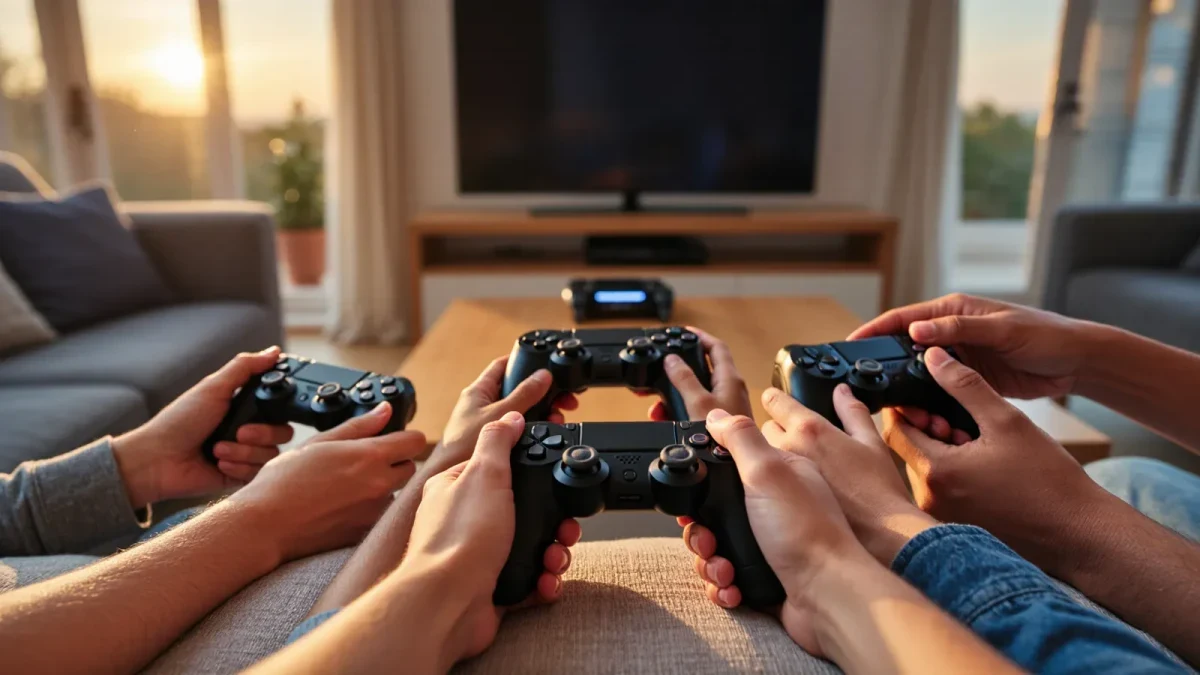
The best ESRB E-rated video games for kids ages 4-6 are Mario Kart 8 Deluxe, Super Mario 3D World + Bowser's Fury, Animal Crossing: New Horizons, Kirby's Dream Buffet, and Sackboy: A Big Adventure — every one of them carries an official ESRB rating of E (Everyone) and can be played by a pre-reader with either a co-op parent or simple controls. All are available on Nintendo Switch, and several also run on PlayStation and Xbox, so whichever console your family owns, there is something on this list your kindergartner can actually play rather than just watch.
What does an ESRB E rating actually mean for a 4- to 6-year-old?
Per the ESRB's published rating guide, E (Everyone) means content is generally suitable for all ages and may contain mild cartoon or fantasy violence at most — think a cartoon character bouncing off a screen, nothing resembling realistic conflict. For this specific age band, though, two honest caveats apply. First, E-rated does not automatically mean playable by a non-reader: many games gate progress behind text menus. Second, fine motor skills at age 4 are different from age 6, which is why every pick below either has assist features or a two-player mode where a parent can quietly do the hard parts.
The sweet spot for this age is games with generous checkpoints, no fail states that erase progress, and either spoken or no dialogue. All five picks below meet at least two of those three tests.
Which E-rated games are the best starters?
| Title | ESRB rating | Players | Platforms |
|---|---|---|---|
| Mario Kart 8 Deluxe | E | 1-4 | Switch |
| Super Mario 3D World + Bowser's Fury | E | 1-4 | Switch |
| Animal Crossing: New Horizons | E | 1-4 | Switch |
| Kirby's Dream Buffet | E | 1-4 | Switch |
| Sackboy: A Big Adventure | E | 1-4 (co-op up to 4) | PS5, PS4 |
Why is Mario Kart 8 Deluxe the safest first game?
Because of smart steering. Turn it on and the game physically prevents a young driver from falling off the track, meaning a 4-year-old can finish a race in last place and still feel like a racer. Add auto-accelerate (the kart drives itself; the child only steers) and you have effectively tunable difficulty inside a game rated E for everyone. Four-player split-screen means siblings and parents can race in the same room, and a family tournament takes about twenty minutes.
Why does Super Mario 3D World work for non-readers?
Two design choices make it ideal for ages 4-6. First, the bubble system: when a young player falls, they float in a bubble instead of dying, and a parent playing alongside pops them back in. Nobody has to sit out. Second, playable characters have different speeds — a parent can take the slow character and the child the fast one, and they naturally stay together. The game is fully navigable by icon, so a child who cannot yet read menus can still change levels.
Is Animal Crossing good for a 5-year-old?
Yes, with one setup note. Animal Crossing: New Horizons (E, Switch) has no failure state whatsoever — you water flowers, catch bugs, decorate a house, and the worst thing that can happen is a bee chase. It is the most relaxing game on this list and the one most likely to become a daily fifteen-minute ritual. The catch: the first day of play involves a lot of dialogue, so plan to sit in and read for your child during setup, after which day-to-day play is mostly icon-driven. One island per console also means siblings share, which is either a feature or a negotiation, depending on your household.
What about PlayStation or Xbox families?
Sackboy: A Big Adventure (E, on PS5 and PS4) is the standout: a colorful platformer with four-player couch co-op and checkpoints so frequent that a young child never loses more than thirty seconds of progress. On Xbox, the E-rated shelf is thinner, but Minecraft's E10+ rating sits just above this list's cutoff and becomes the natural next step around age 7, especially in split-screen with a parent on console versions. If your household is Xbox-only and your child is 4, the honest recommendation is to lean on party-style E titles and let Minecraft wait a year.
How much gaming is right for ages 4-6?
The American Academy of Pediatrics has long recommended limiting non-educational screen time for young children to about an hour per day and co-viewing with a parent whenever possible — a standard that maps neatly onto gaming: one short session, ideally with a grown-up in the second player slot. Every current console supports hard play-time limits through its parental controls app (Nintendo Switch Parental Controls, Xbox Family Settings, and PlayStation's family manager), so the boundary does not depend on parental willpower at 7:45 p.m.
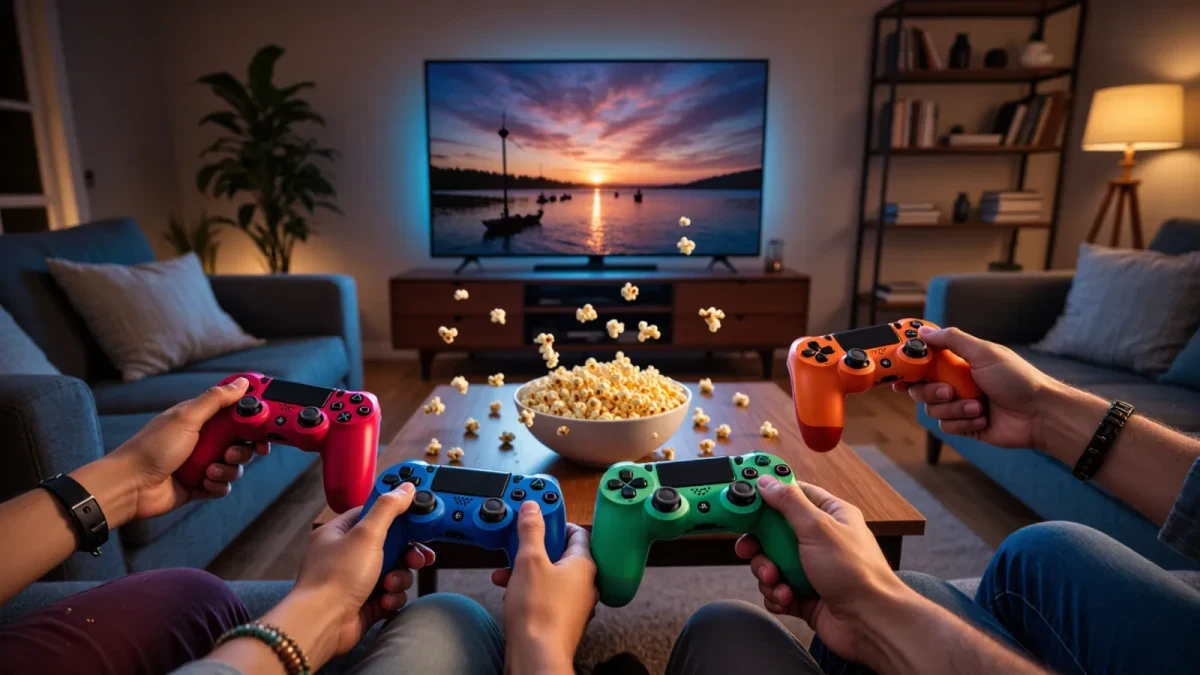
A practical rhythm that works for many families at this age: one race or one level after preschool, controller down, done. The E-rated games above are built for exactly that loop — short, satisfying sessions that end on a high note instead of a cliffhanger.
How do you know when your child is ready for E10+?
The E10+ threshold (age 10 and up, per the ESRB) is less about a birthday than about two skills: handling mildly more intense fantasy action, and reading fluently enough to follow text instructions without frustration. Many kids are functionally ready between 7 and 9, and the jump from Mario Kart 8 Deluxe to Minecraft or Overcooked! 2 is the classic first step. Until then, the five E-rated titles above will carry a family a surprisingly long way — these are games parents genuinely enjoy replaying, which is the real secret of a calm family gaming routine at this age.