Planning weekend family activities becomes easy when you stop treating the weekend as one blank page and start treating it as three slots: one anchor outing, one home block, and one reset hour. Families that use a light structure like this consistently report fewer Saturday-morning arguments and more actually-completed plans, because the decision is made once, in advance, instead of renegotiated hourly with tired children. Weekend family activities do not need to be elaborate; they need to be decided before Saturday at 9 a.m.
Why do unplanned weekends fall apart?
Because every unplanned hour becomes a negotiation, and negotiations with hungry children are lost causes. When nobody has decided anything by mid-morning, the default wins: screens, chores resentment, and a late-afternoon scramble to salvage the day. A written plan, even a loose one, removes the friction. The plan is not a prison; it is a default that everyone agreed to while calm.
What is the three-slot system?
It divides any weekend into three named blocks, each with a different energy level:
- Anchor outing (2-3 hours). One event outside the house: a park, library, pool, trail, museum free day, or visit to relatives. One is plenty.
- Home block (1-2 hours). One shared activity at home: baking, a board game, a craft, gardening, or a movie. This is the memory-maker on a budget.
- Reset hour. A protected window for laundry, school bags, and quiet solo time so Sunday night does not arrive like a freight train.
Slots keep expectations realistic. Two anchors in one day with small children is a recipe for tears, theirs and yours.
When should you plan the weekend?
Thursday evening is the sweet spot, before Friday fatigue and weekend plans collide. A 10-minute family huddle works: pull up the calendar, ask each person for one idea, and slot them in. Kids who help choose the anchor outing complain dramatically less about attending it. Write the plan where everyone can see it, on a whiteboard, a paper on the fridge, or a shared family note.
How do you pick the anchor outing?
Rotate three sources so weekends do not repeat into boredom:
| Week pattern | Anchor idea | Cost |
|---|---|---|
| Week 1 | Nature: trail, beach, bike path, park | Free |
| Week 2 | Community: library event, farmers market, free museum day | Free to low |
| Week 3 | People: grandparents, friends, potluck | Free |
| Week 4 | Treat: cinema, bowling, zoo, ice cream outing | Budgeted |
Many museums and public attractions run free or discounted admission days monthly, usually weekdays or first weekends; check their sites on Thursday when you plan. Libraries remain the single most underused family resource in most towns, with weekly story times, STEM kits, and passes to local attractions in some systems.
What does a backup plan look like?
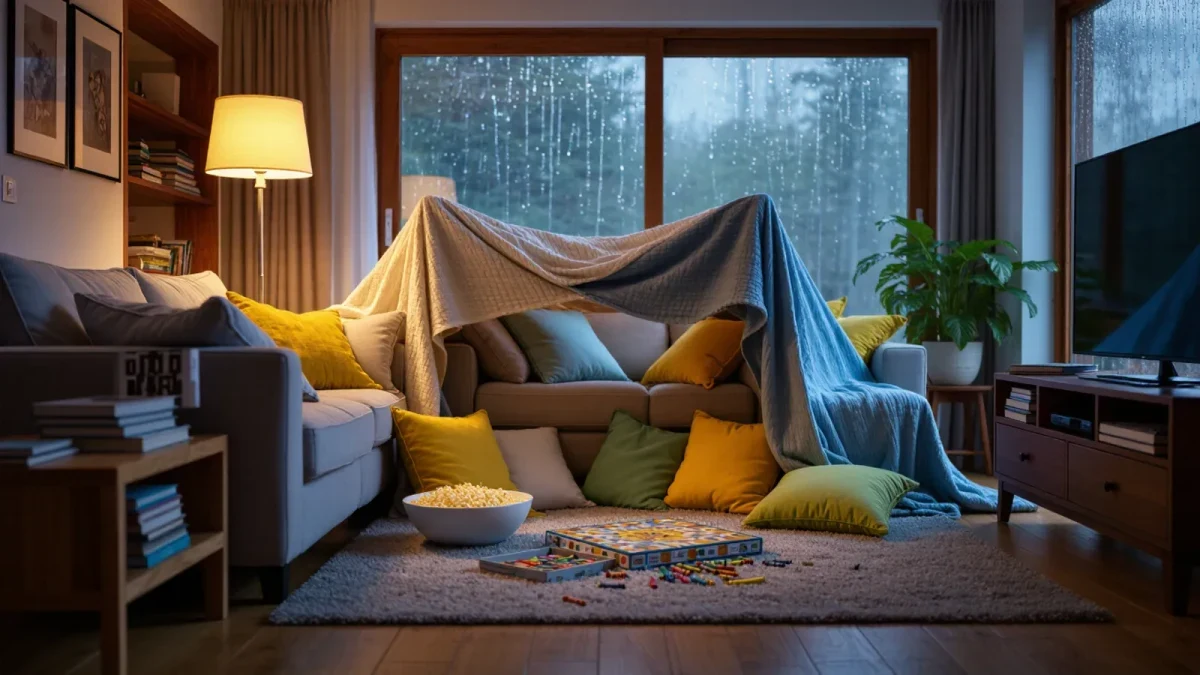
Every anchor needs a rain option named in advance: the library instead of the park, an indoor pool instead of the trail, a blanket-fort movie instead of the backyard campout. Deciding the backup on Thursday means a rained-out Saturday costs you five minutes, not the whole morning. Keep a standing list of five backup activities on the same fridge note so you never start from zero.
How do you handle different ages and interests?
Use splits, not vetoes. One parent takes the older kids to the bike park while the other walks with the toddler, then swap next weekend. For home blocks, pick activities with roles at multiple levels: baking has jobs for a 4-year-old (pouring) and a 10-year-old (measuring), and a board game night can pair a little one with an adult as a team.
Should the plan include chores?
Yes, visibly. Slot a 30-minute family tidy on Saturday morning before the anchor, with everyone working at once. When chores are a shared, time-boxed block instead of an individual nag, they stop competing with fun and get done faster. The reset hour on Sunday covers school prep: bags packed, clothes chosen, permission slips signed.
How do you keep the system running?
Three habits carry it: keep Thursday's huddle to ten minutes, accept swaps without drama, and end each weekend with one quick question at dinner, what should we do again? Repeats go on the fridge list. A tradition is just a good plan that got repeated.
The goal of weekend family activities planning is not a packed calendar. It is a weekend where the good parts were chosen on purpose, the boring parts were time-boxed, and nobody spent Saturday morning arguing about what comes next. Start this Thursday with one anchor, one home block, and one reset hour, and let the system prove itself.
What does a simple weekly planning template look like?
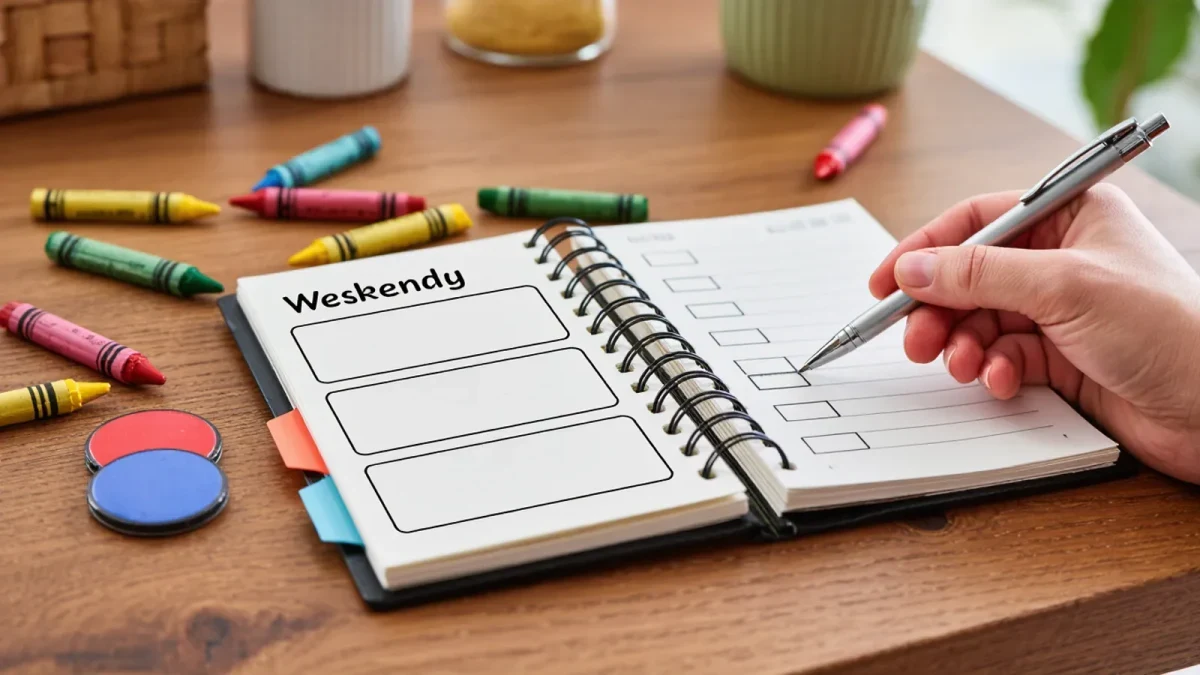
You do not need an app — a five-line template on the fridge covers it. Pick one anchor activity per weekend day, one backup for weather or meltdowns, and one meal that belongs to the family rather than the schedule. Fill it in on Wednesday or Thursday, when the weekend is close enough to feel real but far enough that venues are not sold out.
A workable rhythm:
- Thursday: ten-minute family huddle, everyone proposes one idea
- Friday: confirm the anchor, check hours and tickets
- Saturday: the anchor activity, morning slot if energy is highest
- Sunday: low-key day — one backup activity plus prep for the week
Anything that does not fit the template goes on a running "someday list" instead of dying in conversation. Future weekends are always hungry for ideas.
How do you involve kids in the planning?
Kids commit harder to plans they helped build. Give each child real authority over one slice of the weekend — one picks the Saturday activity from two parent-approved options, another owns the snack, a third chooses the playlist for the drive. Limited choices beat open-ended ones, because "what do you want to do" reliably produces either "nothing" or the impossible.
Rotate the jobs monthly so nobody gets typecast as the snack kid. And when a child's pick flops, resist the rescue. A rainy picnic eaten in the car still counts as their idea executed, which is the actual skill being practiced.