Every family hits the question eventually: your child wants to see the movie, but it was a book first. Read-then-watch, or watch-then-read? There is a genuinely defensible answer for most cases, and it changes with age. Here is a practical framework, plus the adaptations where the choice is easy.
Book first or movie first — which is better?
Book first, when your child will realistically read it — and freely, when they will not. The case for reading first is about imagination: the child casts the characters and builds the world, and the film becomes a comparison rather than a replacement. That comparison is where the real literacy value lives, because a child who has read the book watches actively, hunting for changes. The case for watching first is access: a film can open a book that would otherwise sit untouched, and for a reluctant reader a two-hour on-ramp to a 300-page novel is a fair trade. The honest rule: reading first is richer when it is realistic; watching first is better than nothing, always.
Does the order change with age?
Sharply. Ages 5-8: the book is a picture book or early chapter book, read it together first — Where the Wild Things Are, Charlotte's Web. Ages 8-11: the golden read-first window; kids this age can finish a middle-grade novel in a week and the movie becomes a reward. Ages 12+: let them choose, because forced reading backfires exactly when reading for pleasure is most fragile. One useful hybrid for any age: read the first chapters together, watch the film, then decide whether to finish the book — the film functions as a trailer for the novel rather than a substitute.
| Book and film | Film year / rating | Recommended order |
|---|---|---|
| Charlotte's Web | 1973, G / 2006, G | Book first |
| Matilda | 1996, PG | Book first |
| Harry Potter and the Sorcerer's Stone | 2001, PG | Book first |
| Jumanji | 1995, PG | Book first (picture book) |
| How to Train Your Dragon | 2010, PG | Either — film departs freely |
| Wonder | 2017, PG | Book first |
Ratings per the MPA.
Which adaptations reward reading first most?
Harry Potter and the Sorcerer's Stone is the textbook case: the 2001 film (rated PG per the MPA) is a faithful compression, and kids who have read the book carry the full Hogwarts map in their heads. Roald Dahl's Matilda benefits even more — the 1996 film (PG) is charming, but Dahl's narrator is the actual star, and the jokes read louder than they play. Wonder (2017, PG) works either way, but the novel's multiple-viewpoint structure — including the sister's chapters — teaches empathy the film simply has no room for. And picture-book adaptations like Jumanji (1995, PG) take minutes to read first; there is no reason not to.
When is the movie actually the better starting point?
Sometimes the film is not just acceptable but superior or freestanding. How to Train Your Dragon (2010, PG) keeps only the premise of Cressida Cowell's books — the film's plot, tone, and ending are its own invention — so treat them as cousins rather than versions. Where the source novel is long, dense, or adult-leaning, a good film adaptation is a legitimate first door: many kids met Jurassic Park or The Lord of the Rings on screen and reached the books years later, on their own momentum. The failure mode to avoid is the reverse snobbery of assigning a difficult novel and souring a child on both formats at once.
How do you turn it into a family ritual?
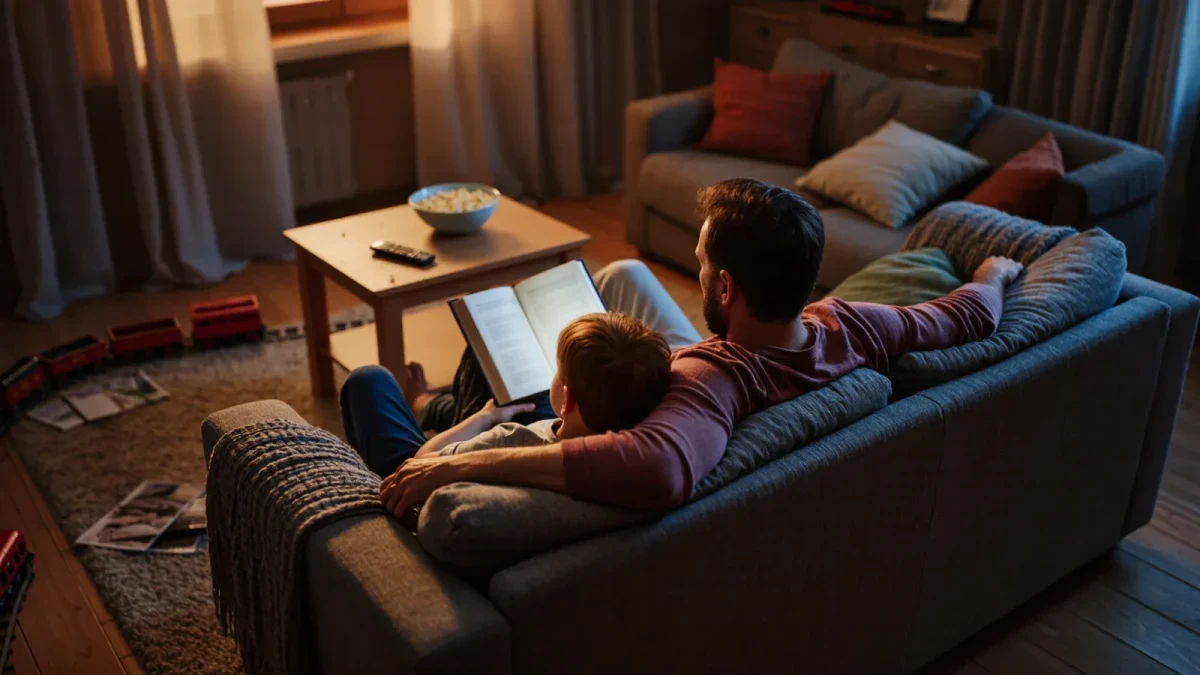
Structure it as a two-act event. Act one: read together over a couple of weeks — alternating pages aloud works long past the age kids admit it does. Act two: movie night with the book's own cover propped by the screen, then a fifteen-minute changes-hunt debrief: what did the film keep, cut, add, and why? Kids become startlingly sharp editors, and arguing about a adaptation choice is real literary criticism wearing pajamas. Rotate who picks the next pair, and keep a family tally of verdicts: book better, movie better, or — the rarest and best — both.
- Keep it low-stakes: no quizzes, no essays, no 'the book is always better' lectures.
- Different editions count: graphic-novel versions of classics are reading, not cheating.
- Let the film date the ritual: finish the book, then see the adaptation in a theater if one is playing.
The order matters less than the pairing. A family that reads a book and then watches its film together is running one of the cheapest, most durable shared-culture rituals available — whichever door you enter first.
Which order works best: book first or movie first?
Book-first rewards strong readers with the full "that's not how I pictured it" experience, but it can stall kids whose reading stamina is still growing. Movie-first is not a failure — a child who loved the film often races through the book afterward to spend more time in the world, and that motivation is worth more than purist order.
A quick reference for common pairings:
| Book | Film | Good fit for ages |
|---|---|---|
| Charlotte's Web | Charlotte's Web (2006) | 6+ |
| Matilda | Matilda (1996) | 7+ |
| Wonder | Wonder (2017) | 8+ |
| Harry Potter and the Sorcerer's Stone | Same title (2001) | 8+ |
| Holes | Holes (2003) | 9+ |
| The Lion, the Witch and the Wardrobe | The Chronicles of Narnia (2005) | 8+ |
How do you talk about a movie after finishing the book?
Keep the conversation short, specific, and free of wrong answers. Two questions carry most of the weight: "What did the movie get right?" and "What did it leave out that you missed?" Comparing versions teaches kids that adaptation is a set of choices — runtime, casting, tone — rather than a betrayal.
Let disagreements stand. A child who liked the film's ending more than the book's is doing real literary thinking, not failing at it. End on a plan: which book should the family read before its movie next? That single question turns one adaptation into a habit.