The best family movie traditions are not about which film you watch — they are about the fact that you watch it every year, the same way, with the same snacks. Annual viewing rituals give kids a portable sense of home they carry into adulthood. Here is how to build them deliberately, calendar included.
Why do repeat viewings work so well for families?
Because predictability is the point. A film watched every December is no longer entertainment; it is an anniversary. The repetition itself does the work — kids anticipate it, quote it in the weeks before, and eventually catch the jokes that went over their heads two years ago. By the time they are teens, the annual viewing has become a family artifact, and the film is inseparable from the people around the screen. This is also why the specific movies matter less than families expect: a mediocre film watched ritually beats a masterpiece watched once.
How do you start an annual movie tradition?
Pick a date, a film, and a food — then never change them. The date anchors it: the first Friday of December, the last night of summer break, the eve of the first day of school. The film provides the content; let each year's audience vote once, but the rotation belongs to the family. The food is the secret ingredient, because taste memory is the strongest memory. One special dish that appears only with that film — cocoa and cinnamon rolls, a particular pizza, grandmother's popcorn — and the tradition becomes self-sustaining within two or three years.
- Choose the anchor date — a holiday, a school break, a season's first snowfall.
- Fix the menu — one food that appears only on this night.
- Run it three years minimum — traditions feel silly in year one and permanent by year three.
- Add one small ceremony — youngest viewer presses play, everyone wears the ugly blanket, credits get watched standing up.
Which films hold up as annual traditions?
The test is repeatability across ages, not quality alone. The perennial list below leans on films rated G or PG per the MPA, so the whole table can share them for a decade. Rotate through categories rather than repeating one film into the ground — a holiday pick, a summer pick, a Halloween pick, and a 'family anniversary' pick covers a whole year.
| Slot | Example films | Rating |
|---|---|---|
| Holiday classic | It's a Wonderful Life (1946); A Charlie Brown Christmas (1965); Elf (2003) | PG / G / PG |
| Halloween pick | It's the Great Pumpkin, Charlie Brown (1966); Hocus Pocus (1993) | G / PG |
| Summer opener | Jaws is for grown-ups; try The Sandlot (1993) or Moana (2016) | PG |
| Snow day | Frozen (2013); Happy Feet (2006) | PG |
| Spring break | The Princess Bride (1987); The Muppet Movie (1979) | PG / G |
Ratings per the MPA; verify individual titles as tastes and ages evolve.
How do traditions survive kids growing up?
By upgrading rather than canceling. Around age ten, hand over a piece of ownership: they pick the film, host the night, or cook the menu item with you. Around thirteen, when enthusiasm publicly collapses, quietly reduce rather than remove — the annual film becomes background to baking rather than the main event, and attendance quietly stays near perfect. And when kids leave home, ship the tradition to them: a care package with the DVD and the recipe in November does more for family cohesion than any phone call schedule. The families with the strongest rituals are the ones whose young adults still fly home for the December movie, mostly for the food and the seats they always sit in.
What if you miss a year?
Resume without ceremony. The biggest tradition-killer is guilt — treating a missed year as a broken streak turns a joy into an obligation. Declare the tradition 'annual, on average,' pick the next date, and carry on. The resilience is what you are modeling: the point was never perfect attendance, it was the standing promise that this family watches this film together, and the promise survives a gap.
- Write it down: a shared calendar entry titled with the tradition's name makes it real.
- Keep a log: one line per year — date, film, who fell asleep first — becomes a family heirloom by year ten.
- Start small: one tradition done well beats four done halfheartedly.
Pick your first anchor date this month, choose a film you already love, fix the menu, and press play. In three years you will not remember why you hesitated, and in twenty your kids will be arguing over who inherits hosting duties.
What does a year-round holiday movie calendar look like?
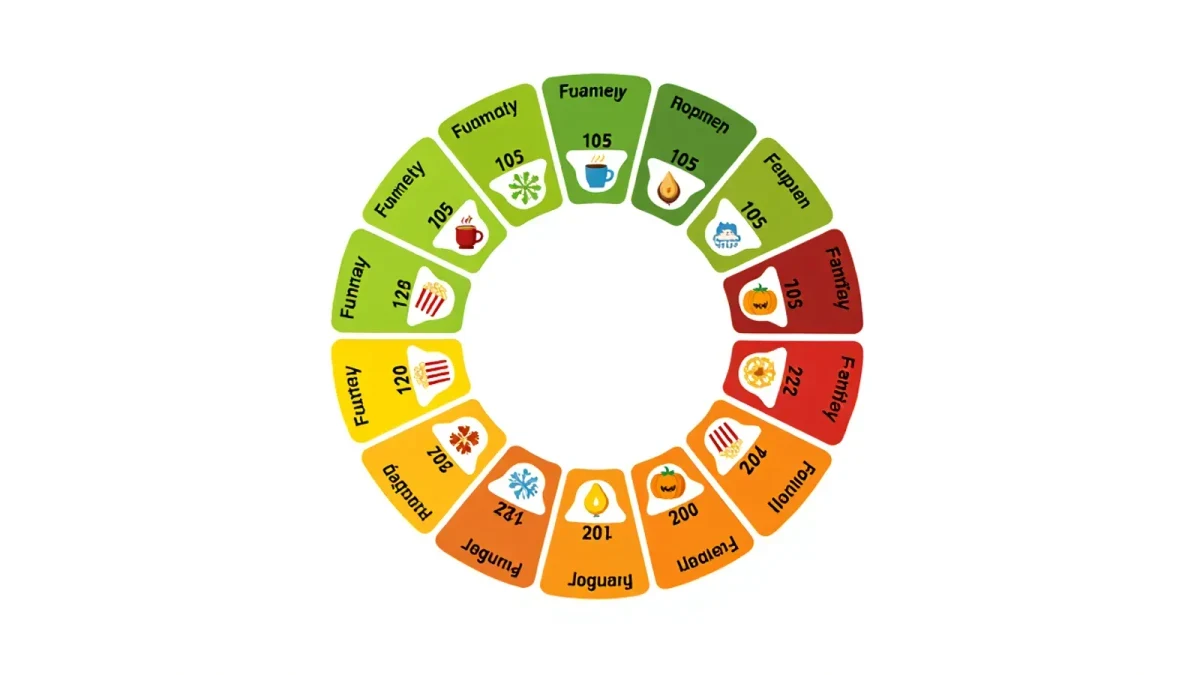
Holiday movies do not have to hibernate eleven months a year. Spreading them across the calendar gives every season its own screening anchor and keeps December from turning into a single overloaded binge. A rough map looks like this:
- Winter: the core holiday classics in December, snow-day favorites in January and February
- Spring: Easter-adjacent picks and a "spring is coming" feel-good movie night
- Summer: Fourth-of-July flag-wavers and summer-vacation adventures
- Fall: gentle Halloween staples through October, gratitude-themed favorites by late November
Post the calendar where everyone can see it and let kids mark the next event. Anticipation is half the tradition; the movie is just the excuse to gather.
What rituals turn a viewing into a tradition?
Rituals survive because they are small, repeatable, and slightly silly. The same blanket, the same mug with hot chocolate and exactly three marshmallows, the official first watch of the season on a specific date — details like these cost nothing and become the parts kids remember. Assign roles early: one child is the official trailer announcer, another runs the snack pass.
Resist upgrading the ritual every year. Consistency beats elaboration, and a tradition that requires three hours of setup will quietly die by November. If grandparents or cousins join remotely, sync the start time and keep a phone propped at the table. Attendance counts, format is negotiable.