Animated movies feel like magic to kids, and the truth is nearly as good: a studio animated feature takes roughly four to five years and hundreds of artists to make, per production details shared by major studios like Pixar and DreamWorks. Here is what actually happens between the first idea and the premiere, explained the way you would tell it at a family movie night.
How does an animated movie start?
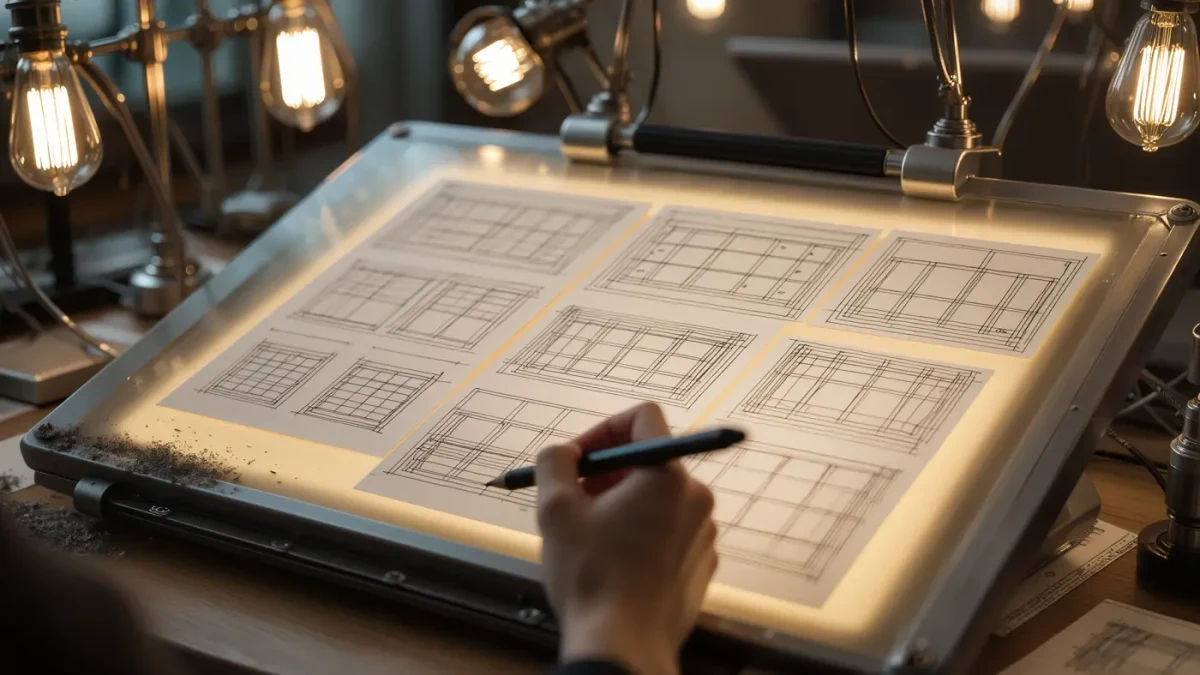
With a pitch, then a script — but not a normal script. Writers draft the story, and then story artists translate every scene into thousands of hand-drawn storyboard panels, like a giant comic-book version of the film. These panels are cut together with temporary voices and music into a rough video called a story reel. Directors watch it, hate half of it, and the team redraws. This iterative loop is where animated films are truly written; per Pixar's published production notes, a film's story is reworked many times over years before animation begins in earnest.
This stage also explains why animated films are so tightly structured. Fixing a story problem on paper costs a week; fixing it after animation costs a million dollars. So studios front-load the rewriting, and the film you see has usually been taken apart and rebuilt several times.
When do the actors record their voices?
Earlier than most people expect, and in pieces rather than in order. Voice actors typically record sessions throughout production, often years before release, so animators can draw performances matched to the line readings. Sessions are filmed too — animators study the actor's face for expressions to fold into the character. Big ensemble films record actors separately and splice the best takes together; a single line might be re-recorded dozens of times across months. Improvised lines that land — a signature of the Shrek and Illumination films — get storyboarded in after the fact, reversing the usual flow.
What do animators actually do all day?
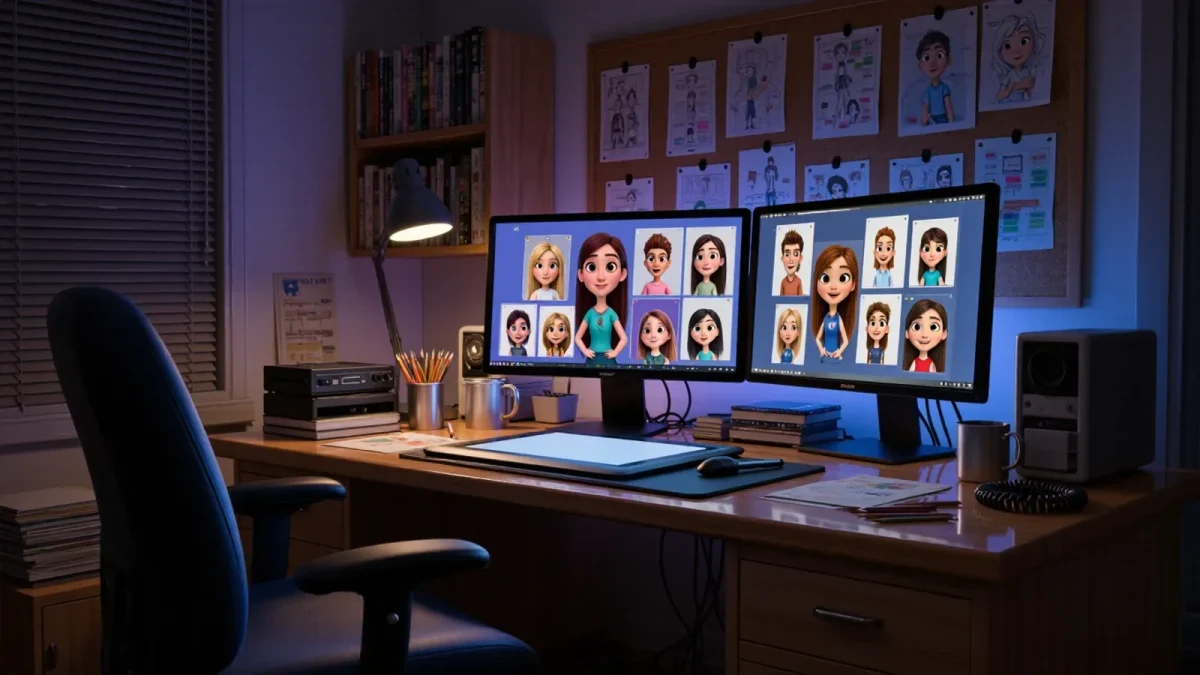
They are actors with cursors. After characters are modeled as digital puppets with hundreds of controllable controls, animators pose them frame by frame — at the standard film rate of 24 frames per second, which per standard film production means roughly 1,300 animated frames for every minute of a movie. A good animator produces a few seconds of finished acting per week. Every shrug, blink, and stumble is deliberately performed; nothing is captured, the way live-action cameras capture actors.
- Modeling: characters, sets, and props are built as 3D digital objects.
- Rigging: controls are added so models can move like puppets.
- Layout: virtual cameras block each scene, like a digital rehearsal.
- Animation: animators perform the characters frame by frame.
- Effects and lighting: fur, water, fire, and final illumination are added.
- Rendering: computers assemble the finished frames, a process that can take hours per frame.
Why does animation take so long?
Because nothing exists until it is built. A live-action film inherits reality for free — real sunlight, real streets, real faces. An animated film must construct every leaf, every reflection, every strand of hair. Production typically runs in overlapping waves: while one team animates act two, another is still rigging act-three characters, and lighting artists follow months behind. The famous stat from studios: a single animated feature contains well over a hundred thousand individual frames, and late-stage rendering can consume a studio's entire render farm around the clock for months.
Do kids' movies get tested like this too?
Constantly. Studios run work-in-progress screenings for internal audiences and often for families, then track where attention drops and jokes die. Sequences that test poorly get cut or reconceived, even late and expensively. When you hear that a scene 'was cut for time,' in animation it more often means it was cut for story — reboarded, re-animated, or removed after testing showed kids disengaging. It is one of the least glamorous and most important parts of the pipeline.
How can your family see the process in action?
The easiest window is special features: many animated releases on digital and disc include storyboard-to-final comparison reels and artist commentary that show exactly the stages above. Watching a two-minute scene evolve from rough drawings to finished frame is one of the best film-school lessons a kid can get in one sitting — and it reliably converts 'I want to make movies' from a vague wish into a concrete 'I could do storyboards.' Studio exhibitions and behind-the-scenes books cover the same ground in more depth.
The next time the lights go down, you will know the deal: years of drawings, thousands of artists-hours per minute of screen time, and a story that was broken and rebuilt a dozen times so it would look effortless. That is the real magic trick.
How is the sound recorded?
Voice work happens long before the film looks finished. Actors record in booths, often alone, guided by the director through headphones while looking at rough storyboard drawings rather than polished animation. A single line may be read dozens of ways so editors can pick the exact right delivery later.
Sometimes actors perform together in the same room to capture real back-and-forth chemistry, and improv from those sessions regularly ends up in the final cut. Sound effects get their own pass too: footsteps, doors, and monster roars are built by Foley artists who watch the footage and create noise in sync with it. Watching a clip of a Foley session is the fastest way to convince a kid that movie sound is a craft, not an accident.
Why do studios hold test screenings?
Before release, studios show rough versions of animated films to real audiences and track what works. Cards and surveys report where people laughed, where they got bored, and whether the ending landed. Filmmakers then retime jokes, adjust scenes, and occasionally reanimate whole sequences.
For families, this is a great conversation starter about revision: even hundred-million-dollar movies are drafts that get notes and feedback. Kids who gripe about editing an essay may feel differently knowing Woody and Simba went through the same process. Nobody, studio or student, nails it on the first pass.