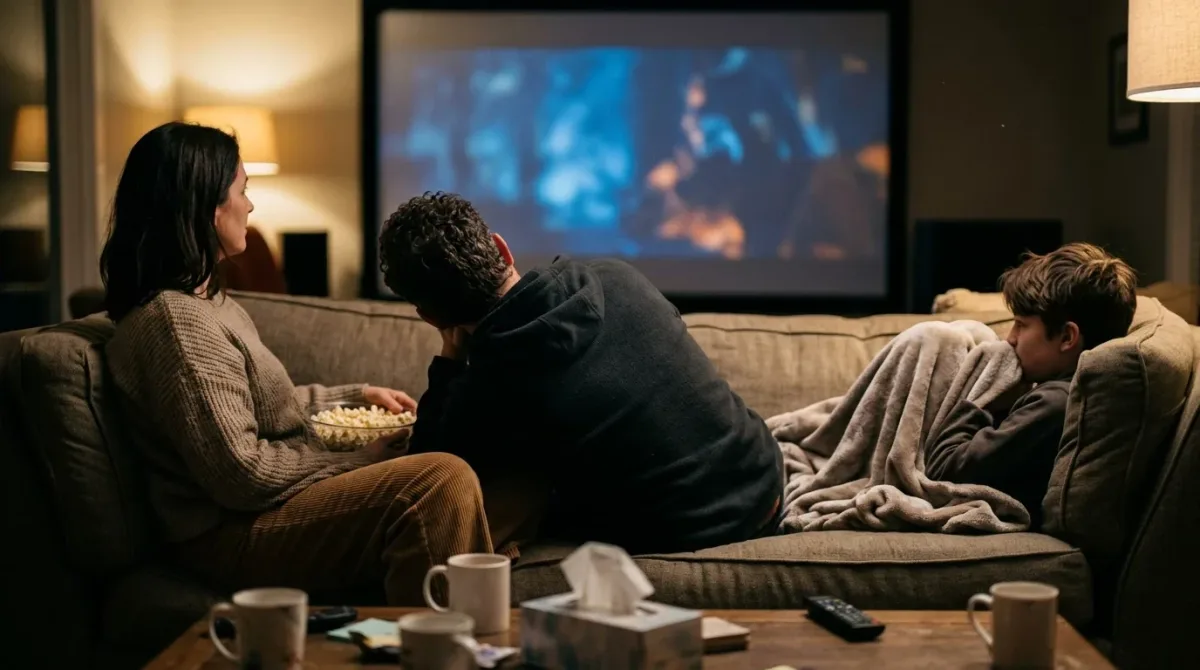
Movie ratings aren't just an age suggestion — G, PG, PG-13, R, and NC-17 each flag a specific level of violence, language, sexual content, or drug use, decided by a rating board made up entirely of parents, according to the Motion Picture Association (MPA). Only the R rating legally requires an accompanying parent or adult guardian for anyone under 17.
What Does Each Rating Actually Mean?
Here's how the MPA's Classification and Rating Administration (CARA) — the group that has run the voluntary rating system for nearly 60 years — describes what each rating covers, from mildest to most restrictive, in the MPA's ratings guide.
| Rating | What It Signals | Typical Content, per CARA |
|---|---|---|
| G — General Audiences | All ages admitted | Little to no violence, presented comedically if present at all; no sexual content, nudity, drug use, or problematic language |
| PG — Parental Guidance Suggested | Some material may not be suitable for children | Mild violence such as pushing or cartoonish action; infrequent mild language; brief nudity limited to backsides |
| PG-13 — Parents Strongly Cautioned | Some material may be inappropriate for children under 13 | Realistic but limited violence; brief nudity; mild sexual references; occasional strong language, possibly including one use of a stronger swear word |
| R — Restricted | Anyone under 17 needs an accompanying parent or adult guardian | Graphic violence with visible injury; frequent profanity; depictions of sexual activity; full nudity |
| NC-17 — No One 17 and Under Admitted | Adults only | Extremely graphic or brutal violence, explicit sexual content, and pervasive drug use |
Parent note: A rating is a summary, not an itemized list. Two PG-13 films can land in very different places within that band, so families who want scene-level detail should look for the specific content descriptors CARA publishes alongside a title's rating rather than relying on the letter alone.
Who's on the Board That Decides the Rating?
CARA's rating board is made up entirely of current parents with no other ties to the entertainment industry, and each must have had children between ages 5 and 15 when they joined, according to the MPA.
The board describes its own guiding question as: "What would I want to know about this film before I let my kid see it?" Kelly McMahon has served as Executive Vice President and Chair of CARA since May 6, 2019, alongside Director of Policy and Business Operations Negeen Papehn. Raters serve terms of up to seven years and roll off the board once all of their own children turn 21 — keeping the group's perspective anchored in parents currently raising kids rather than industry veterans or former parents.
How Does a Film Actually Get Its Rating?
After watching a completed film, board members submit preliminary ballots, discuss the film as a group, then submit final ballots with their reasoning, according to CARA's published rating rules. The Chairperson and Senior Raters — currently Matt O'Connor and Mario Moogan — then determine the specific content descriptors that accompany the rating and explain what drove it.
The MPA describes the decades-old system as "the gold standard of voluntary industry self-regulation," noting the ratings marked their 50th anniversary in 2018. The system remains voluntary for studios, but nearly every wide theatrical release in the U.S. carries one of the five ratings.
Can a Studio Appeal a Rating It Doesn't Like?
Yes — a producer or distributor can appeal to a separate Appeals Board made up of MPA and National Association of Theatre Owners (NATO) representatives plus independent members, but only by arguing the original rating was "clearly erroneous," per CARA's rating rules.
Overturning a rating on appeal takes a two-thirds majority vote, and each version of a film gets exactly one appeal. A studio that loses an appeal — or chooses not to file one — can still release the film with edits and resubmit it for a fresh rating instead.
Frequently Asked Questions
Is a PG rating safe for all young kids?
Not automatically. PG signals "some material may not be suitable for children," which can include mild violence, infrequent mild language, or brief nudity limited to backsides, per CARA's ratings guide. Parents who want more detail should check the specific descriptors CARA assigns to that title.
What's the real difference between PG-13 and R?
PG-13 limits violence, language, and nudity to brief, non-graphic depictions, while R permits graphic violence, full nudity, and explicit language — and legally requires an accompanying parent or adult guardian for anyone under 17, according to the MPA's ratings guide.
Who actually watches the movie and picks the rating?
A rotating board of current parents with no ties to the entertainment industry, each required to have had children between ages 5 and 15 when they joined, according to the MPA. Members leave once all their own children turn 21.
Can a studio change a rating it doesn't like?
Yes, through a formal appeal to a separate Appeals Board of MPA and NATO representatives, but only by showing the original rating was "clearly erroneous." Each film version gets just one appeal, per CARA's published rating rules.
For a related games perspective, read What Do Video Game Ratings Actually Mean? A Family Guide to the ESRB System.